

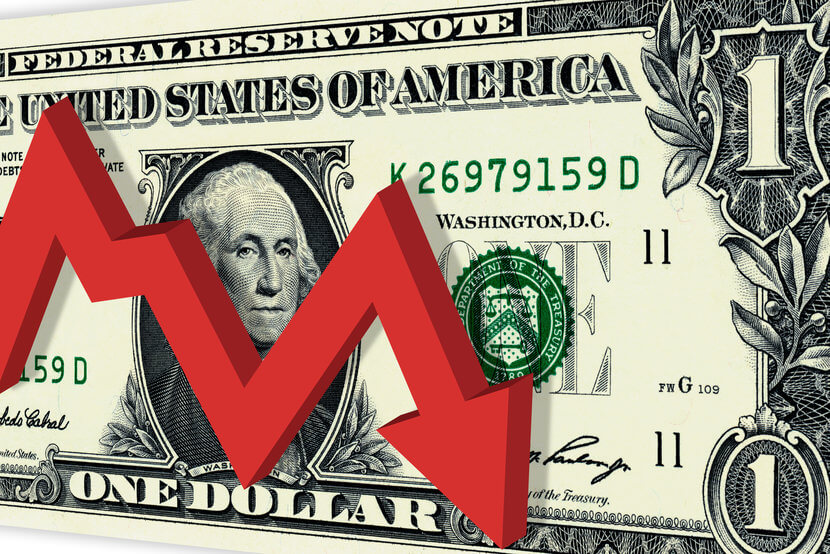
Many things continue to baffle my intellect but one that my mind has refused to subdue to, is the idea of using paper money.
When I take a deep dive back in time and see how money has evolved from barter, to commodity media, to shells, to coins and then to gold, I
have to agree that these forms of exchange carried value. This value was based on either the difficulty in which they were obtained or extracted, or on the value of one good in the eyes of the opposite party.
Several centuries down the road we have papers printed with figures and faces of historical characters as a form
of currency used by the world wide economy. Who came up with the brilliant idea of using paper as a form of exchange and how come everyone up until now is still in agreement with this? Well at least that is how I saw the whole idea until, slowly by slowly, I started getting a bit more knowledgeable in a few aspects of basic economics.
Due to my curiosity, over time I found out that the value of ‘fiat’ money, which is fancy for paper money, is determined by the rate at which it is supplied and demanded for. If people have more money to keep in their pockets and squander, it becomes less valuable. However, if the central bank delays to print more money, its presence becomes scarce and the people hold their money closer to them. However, in much more developed countries, there are slowly increasing cases of printing of counterfeit bills by fraudsters and yet transactions for potentially groundbreaking projects can be made with these. How is it okay that the biggest part of our economy is solely based on this fiat money?

When it comes to the aspect of inflation, I am able to understand that the presence of too much money in people’s hands can lead to prices going up as a way of trapping this excess cash in one’s own court. Bigger notes could be printed to cater for this excess cash in circulation. One special case is Zimbabwe from almost a decade ago. By 2009, it was baffling that one hundred trillion Zimbabwean dollars banknotes existed; I wonder how that looked on a bill. How come the value of the Zimbabwean dollar was allowed to depreciate so quickly?
I know that the value of anything is relative. In an increasingly globalized economy, it has become very evident that the value of a country’s currency is relative. Well if all countries would simply bring commodities to the table, nothing like inflation would exist. The value of the currency is also determined by its country’s trade balance. But if just like many other countries, USA also has a deficit trade balance, what makes it still the more in demand currency?
Admittedly, some countries produce better products than others and offer diversity for choice. However, we must also take into account the role mass media plays in determining values of currencies. Well if this week it was announced that USA’s oil wells are getting depleted, many investors would slowly pull back and the dollar would go down. Surely, it can’t be right that we use a currency as volatile as this that it is literally dependent on social media.

Crypto currency is the best example to demonstrate how volatile baseless currencies can be. A tweet from a famous person like Elon Musk and it’s invaluable. The president of the Us says something bad about it and it is down. Although gold also deviated, it’s margins were really minimal thus it was more stable. This instability even caused global crises in the past. Main reference is to the great depression of the 1930s that could have resulted from the crash in stock market prices in the US.
Stock Markets. Forex. Futures. All sorts of terms come into mind. Sometimes when power is overly centralized, it is a dangerous thing. The 1929 crash of Wall Street, one of the largest financial centres in the world in the 1900s partly led to the great depression. It was central in the trade of many thinks like stocks, securities, forex and many more. I don’t think commodities could be centralized to that level and thus a great depression could never have happened .
How much of an advantage is this paper money economy giving the rich? When President Nixon in 1933 removed the dollar off the gold standard, it meant that the paper money could be printed freely by countries for transactions. The American government could print money to pay debts, not backed by gold, but by a promise and faith. Speak of artists selling paintings of stuck pictures at millions of dollars, they have value because one says so. These days the rich could easily access large sums of money from governments for investment. Noticing that money is merely printed these days, the rich could easily leverage bank loans to get richer while the poor prefer to think that money is this scarce commodity. Saving is of questionable purpose as opposed to investment. After all savings decrease in value due to inflation.


How can business people make long term future deals priced with value of paper money? We cannot trust that in the future the government will not all of a sudden demonetize it (which was the case in Zimbabwe in 2009).
Besides these arguments, the differences in currencies among countries also creates a problem of varying acceptance in different countries and also most obviously; paper money is easily destroyed. That being said, how can worldwide economies be dependent on such a form of currency well knowing the
fragility it brings to them? Increasing trends in soccer and chess show that human beings desire stability and safety more. If that is human nature, isn’t it high time we developed a stable currency too?
ABOUT THE CO-AUTHOR

Akol Edith,19, is an aspiring medical student hailing from Uganda. Sometimes she considers her curiosity more a burden than a blessing. She has tasked herself with the burden of wrapping her thoughts around this world, one she has painfully found to be a herculean task. She is still able to convey the little she has discovered in beautifully crafted pieces that portray her usual train of thought. She therefore brings you this article.


Leave a Reply