

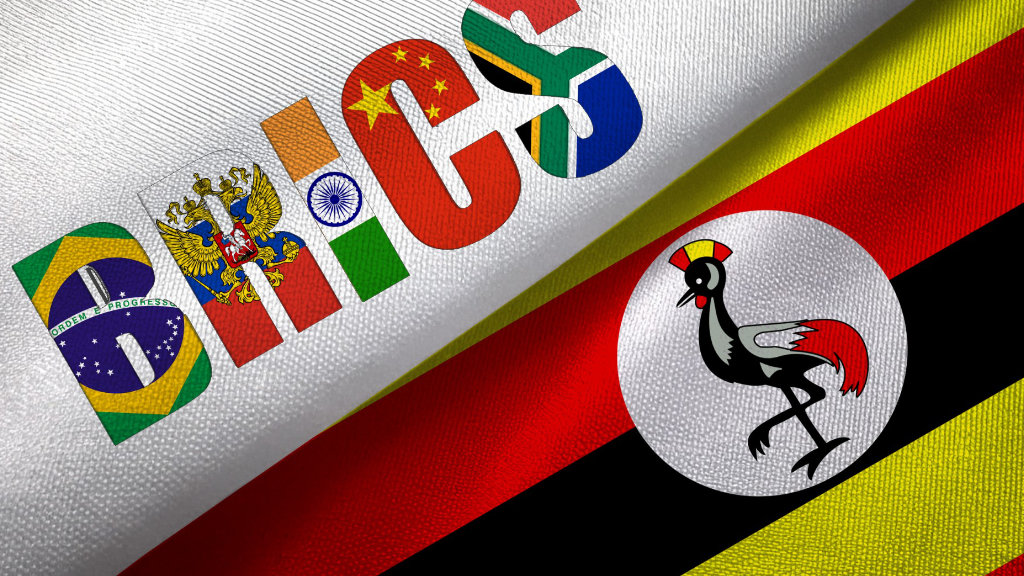
Uganda’s newly found membership in BRICS, the influential political and economic formation of Brazil, Russia, India, China, and South Africa, is a significant shift in its foreign and economic policy. But why on earth has Uganda done this, what does it bode for the country, and how does it fit within the broader global picture? This article tries to demystify these questions by initially providing a brief overview of BRICS, examining the global consensus around it, and then examining Uganda’s decision, its potential implications, and its motivations.
Understanding BRICS: A New Global Power Bloc
BRICS refers to the collective name of five major emerging economies: Brazil, Russia, India, China, and South Africa. The bloc was first formed in 2006 as BRIC, including Brazil, Russia, India, and China. South Africa joined the group in 2010, hence becoming BRICS. This group represents over 40% of the global population, most of global trade, and growing influence in world politics and economics. BRICS countries are not only large in population but also economically powerful, with China and India being two of the largest economies in the world in terms of GDP.
BRICS was initially conceptualized as a platform to intensify cooperation between these emerging powers and challenge Western hegemony in global governance, particularly in institutions like the World Bank and the International Monetary Fund (IMF). The bloc has, over the years, made significant strides towards intensified cooperation, establishing platforms like the New Development Bank (NDB) and the Contingent Reserve Arrangement (CRA), designed to provide financial support to member states during crises.
Global agreement on BRICS is diverse. The group has been seen as the counterbalance to Western presence in global institutions but is not free from disapproval. It is disapproved by some, who argue that BRICS countries, despite growing economic clout, still have internal concerns to address, such as inequality, political instability, and corruption. Others see the group as a potential force for a more multipolar world order, where developing countries have more influence in shaping international policies, particularly on issues like climate change, trade, and security.
Despite these controversies, BRICS continues to increase its relevance at the global stage. Other countries have shown interest in being included in the bloc, and the group has just invited new members, including Argentina, Egypt, Ethiopia, Iran, Saudi Arabia, and the United Arab Emirates. Uganda’s decision to join this expanding group of allies falls within the broader trend of countries in Africa and the Global South seeking to align themselves with BRICS in a bid to enhance their economic and political influence.
Uganda’s Move to Join BRICS: Motivations and Strategic Objectives
Uganda’s decision to join BRICS is both a strategic and pragmatic one, rooted in the desire to advance its own national interests within the context of an increasingly multipolar global system. There are several key motivations behind Uganda’s bid to join BRICS:
Uganda’s accession to BRICS as a partner state gives this East African country an opportunity to deepen ties with some of the world’s largest emerging markets and accelerate its own growth. This was stated by Minister of State for Foreign Affairs in charge of Regional Cooperation John Mulimba in an interview with Xinhua News Agency, a partner of TV BRICS. Economic Growth and Diversification: Uganda is a resource-rich nation with vast natural resources, such as oil, minerals, and fertile agricultural land. However, despite all these advantages, Uganda has struggled with development challenges such as poverty, unemployment, and inadequate infrastructure development. By joining BRICS, Uganda seeks to tap into the economic dividends arising from being part of a large and diversified grouping. The country hopes that increased investment and trade by BRICS members will go a long way in sparking economic growth, modernizing its priority sectors, and creating jobs for its rapidly growing population.
Access to Development Financing: Perhaps the greatest contribution that BRICS has made to the global economy is the establishment of the New Development Bank (NDB), whose purpose is to fund development and infrastructure projects in the emerging economies. The nation that would benefit from increased access to low-interest loans and capital from the NDB is Uganda, with its vital infrastructure shortages, especially in transport, energy, and healthcare infrastructure. BRICS membership offers Uganda an opportunity through which it can secure funding for mega infrastructure projects crucial to its future growth.
Geopolitical Influence and Diversification of Alliances: Foreign policy in Uganda has been generally pro-West, particularly through connections with the United States and European Union countries. However, Uganda has sought to diversify its international relations as well, realizing that it needs to engage with more global powers. By joining BRICS, Uganda becomes an independent and influential player in international diplomacy, allowing it to balance its relations with Western and non-Western countries.
Trade Expansion: BRICS countries are some of the fastest-growing markets globally, led by China and India, who are major trading partners to many African nations. With Uganda’s inclusion in BRICS, it is granted better access to these lucrative markets, increasing its exports, mainly in agriculture, minerals, and manufacturing. Uganda also stands to benefit from lower trade barriers and preferential trade agreements within the BRICS platform, making Uganda more integrated in the world economy.
A Louder Voice for Africa: Uganda is very aware of the shifting power dynamics of Africa and the globe. As a member of BRICS, Uganda would be in a grouping that includes South Africa, the most industrialized nation in Africa. Ugandan membership would give the voice of Africa more weight in the bloc and allow the nation to advance more policies that benefit the African continent as a whole, particularly in trade, security, and climate change.
The Effects of Uganda’s Membership in BRICS
Uganda’s joining of BRICS will undoubtedly have profound consequences for its domestic and global policy. Firstly, BRICS membership is likely to accelerate Uganda’s economic development, particularly through access to finance and trade. It will also open new channels for diplomatic engagement and cooperation, allowing Uganda to diversify its international relations and break from excessive reliance on Western traditional partners.
Nevertheless, the decision to join BRICS is not wholly problem-free. Uganda will have to navigate complex geopolitical rivalries within the grouping because there are typically competing interests even within the BRICS member states. For example, while Uganda may agree with China on economic matters, its relations with Russia or Brazil may be complicated, given the political and economic differences in these countries. Additionally, Uganda’s joining BRICS may also unsettle Western powers, as they may view the move as an attempt by Uganda to divorce from long-standing alliances.
In the longer perspective, membership in BRICS for Uganda could also have profound implications for regional integration in Africa. As part of the BRICS bloc, Uganda would exercise increased influence on the formulation of policies affecting the African continent, particularly on the African Continental Free Trade Area (AfCFTA) and efforts at economic integration and peace within the African Union.

On the other hand, Western critics have described BRICS as an incoherent alliance driven by anti-Western sentiment, citing competing financial mechanisms such as the New Development Bank, BRICS Contingent Reserve Arrangement, BRICS Pay, and the BRICS reserve currency basket.
Inherently different stake holders have then defended the Bank of Uganda’s (BoU) decision to start purchasing gold locally, arguing it was a safeguard against potential Western sanctions. “We are developing a policy paper for the BoU to start procuring gold reserves domestically, reducing our dependence on foreign reserves. With around $4 billion in foreign reserves, Uganda risks economic destabilization if the US imposes sanctions and freezes these assets,”
The Minister of State for Foreign Affairs, Henry Okello Oryem said.
His remarks follow the BoU’s December 2024 release of new guidelines for purchasing gold locally to ensure the integrity of the process. The 2023 BoU annual report indicated Uganda’s foreign reserves had slightly decreased from $4.08 billion in 2022 to $4.07 billion in 2023, covering 4.15 months of imports. The central bank hopes that buying local gold will help reduce Uganda’s trade deficit and reliance on foreign reserves, enhancing economic stability.
A New Era for Uganda’s Foreign Policy
The move into BRICS by Uganda is a risky attempt at building the country’s economic and political profile on the international stage. Identification with a bloc representing the Global South is a bid to diversify its external relationships, new markets and finance opportunities, and have an enhanced voice in international decisions. Though there are challenges, BRICS membership for Uganda has the potential to redefine its future by presenting new possibilities for economic development, regional power, and global collaboration.
Last but not least, Uganda’s entry into BRICS is an indication of larger African and Global South dynamics, where nations are seeking to regain their sovereignty and build a new, more just, and multipolar world order. It is a recognition that the future of international power is in transition, and Uganda wishes to be part of it. As the global landscape shifts, Uganda’s role in BRICS will be one to watch as it navigates the complexities of international diplomacy and 21st-century development.

Leave a Reply