
Since 1996, the Democratic Republic of Congo (DRC) has endured a devastating humanitarian crisis that has claimed over six million lives, yet it remains one of the most underreported tragedies of our time. The situation in the DRC is heart-wrenching, evoking profound sorrow and outrage. For decades, the country has been engulfed in a protracted civil war, plunging it into a state of chaos and despair.

Located in Central Africa, the DRC is the continent’s second-largest country by area and is endowed with immense natural resources, including cobalt, copper, and other critical minerals. Yet, despite its wealth, the nation has been plagued by political instability, corruption, and relentless violence, particularly in its eastern regions. The capital, Kinshasa, stands as a stark contrast to the turmoil elsewhere, yet even it bears the scars of a nation struggling to find stability. Since gaining independence from Belgium in 1960, the DRC has experienced authoritarian rule, civil wars, and ongoing conflict, leaving its people to grapple with poverty, crumbling infrastructure, and limited access to healthcare and education.
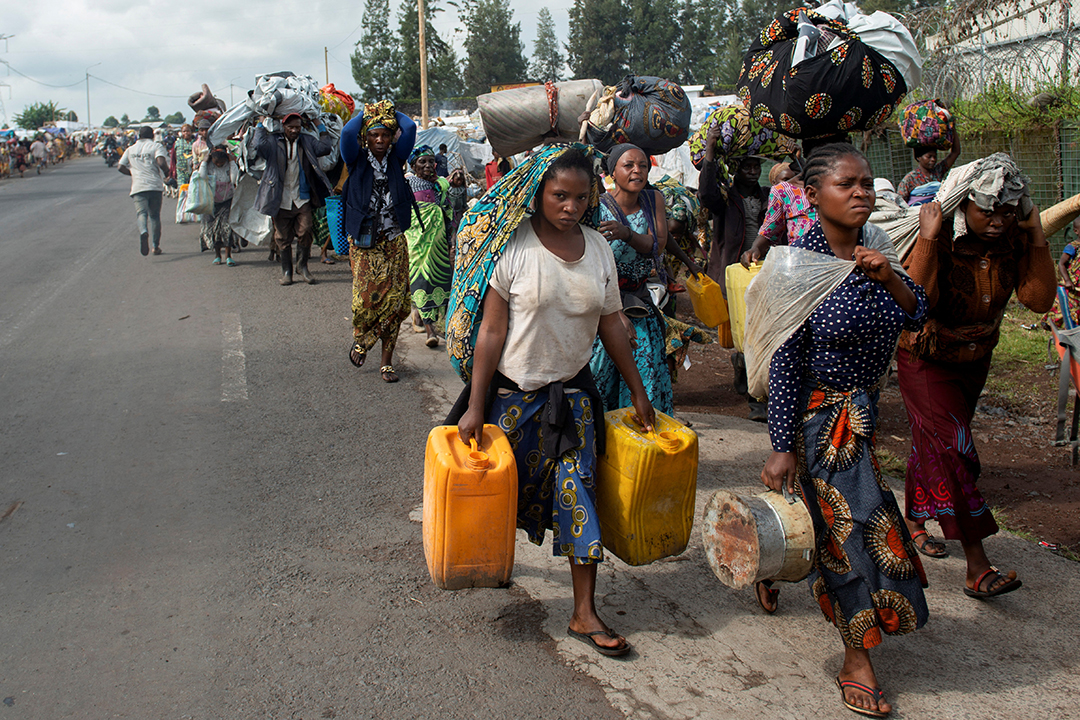
In recent months, terrorist activities and armed conflicts have dominated headlines, displacing millions and traumatizing entire communities. Women have borne the brunt of this violence, with reports of mass rape and brutal massacres leaving survivors scarred physically and emotionally. The scale of suffering is unimaginable, yet the world’s attention remains fleeting.
To truly grasp the magnitude of the crisis in the Democratic Republic of Congo (DRC), it is essential to delve into its historical roots and understand how decades of conflict, exploitation, and political instability have shaped the nation’s tragic trajectory. At the heart of this turmoil lies the Second Congo War (1998–2003), often referred to as the Great War of Africa or the African World War. This conflict, one of the deadliest in modern history, was a continuation of the First Congo War (1996–1997) and left an indelible mark on the region, claiming millions of lives and displacing countless others.
The Second Congo War erupted in August 1998, just a year after Laurent-Désiré Kabila, with the backing of Rwanda and Uganda, had overthrown Mobutu Sese Seko in the First Congo War. However, Kabila’s former allies quickly turned against him, accusing him of failing to address security threats, particularly the presence of Hutu militias in eastern DRC. These militias, responsible for the 1994 Rwandan genocide, had fled to the DRC, where they continued to operate, posing a threat to Rwanda’s stability. In response, Rwanda and Uganda allegedly supported rebel groups, such as the Rally for Congolese Democracy (RCD) and the Movement for the Liberation of the Congo (MLC), in an effort to overthrow Kabila.
Kabila, in turn, sought military support from Angola, Zimbabwe, Namibia, Chad, and Sudan, drawing these nations into the conflict. What began as a localized rebellion quickly escalated into a sprawling regional war, involving nine African nations and approximately 25 armed groups. (The Global Conflict Tracker)
In 1999, the Lusaka Ceasefire Agreement was signed, calling for an end to hostilities, the withdrawal of foreign troops, and the deployment of UN peacekeepers. However, the agreement was largely ignored, and the fighting raged on. The assassination of Laurent-Désiré Kabila in 2001 and the subsequent rise of his son, Joseph Kabila, marked a turning point. Under international pressure, Rwanda and Uganda began withdrawing their forces, and by 2003, a transitional government was established, formally ending the war.
Yet, the end of the Second Congo War did not bring peace. Eastern DRC remained a hotbed of violence, with numerous armed groups continuing to operate. The war’s aftermath left the country deeply fractured, with weak governance, a devastated economy, and ongoing humanitarian crises.
Why Has This War Dragged On?
The conflict in the Democratic Republic of the Congo (DRC) has deep historical roots, stemming from its colonial past. When the country gained independence from Belgian rule in 1960, it quickly fell into political turmoil, marked by the assassination of Prime Minister Patrice Lumumba and the rise of Mobutu Sese Seko. Mobutu’s authoritarian and corrupt rule further weakened state institutions, setting the stage for prolonged instability.
The 1994 Rwandan genocide added another layer of complexity, as millions of Hutu refugees—including those responsible for genocide—fled into eastern DRC. This mass influx exacerbated existing ethnic tensions and led to the formation of armed groups such as the Democratic Forces for the Liberation of Rwanda (FDLR), which continues to operate in the region today.
The Democratic Republic of Congo (DRC) and Rwanda together supply nearly half the world’s coltan, a crucial mineral for electronic devices. However, Rwanda has been accused of smuggling coltan from DRC, with tech companies like Apple indirectly financing the conflict by sourcing minerals from these areas. Although Apple initially denied involvement, it later instructed suppliers to halt purchases from DRC and Rwanda due to traceability issues. This denial, however, opens a Pandora’s box of ethical and moral questions—questions that deserve a deeper, more nuanced discussion at another time, as the implications are both complex and damning. Meanwhile, the U.S. has taken a largely passive stance despite calls for sanctions against Rwanda for its alleged role in the conflict. Lawyer Robert Amsterdam filed a criminal case against Apple on behalf of the Congolese government, arguing that Western governments and corporations bear ultimate responsibility. Rwanda denies smuggling minerals, but experts, such as Guillaume de Brier of the International Peace Information Service, dismiss this claim, pointing out that Rwanda exports far more coltan than its reserves allow. Nevertheless, Congolese miners often prefer selling to Rwanda due to better prices and fewer bureaucratic hurdles, further fueling illegal trade. (Channels TV)

Equally troubling is the political landscape within the DRC itself that are quite murky. From this long standing suffering arose an ill-prepared, untrained coup attempt by a group of revolutionists seeking to overthrew President Felix and rebirth a new Zaire. Christian Malanga, his longtime rival positioned himself as a champion of justice and the people, and orchestrated the uprising with a mission to reclaim power for the people and end the injustices of the current regime. Predictably, the attempt failed. The youth involved, including three American nationals, were captured and sentenced to death for treason and terrorism—an ironic outcome given the broader violence that continues to ravage the region. The international community had a lot to say about the incident, yet the intricate realities of DRC politics and the behind-the-scenes dynamics remain largely obscured.
Since taking office in January 2019, President Félix Tshisekedi has struggled to bring an end to the ongoing conflict with the violence only escalating. Although President Félix Tshisekedi came to power through democratic elections, his administration has failed to implement meaningful reforms, leaving citizens frustrated and the country in perpetual crisis. While he has engaged with regional organizations such as the East African Community (EAC) and the African Union (AU) in an attempt to mediate the crisis, these peace talks have yielded little progress, with hostilities persisting.
On the military front, Tshisekedi has deployed the Congolese Armed Forces (FARDC) alongside UN peacekeepers (MONUSCO) and the EAC Regional Force to combat armed groups. Yet, despite these reinforcements, M23 continues to hold key territories, displacing over 6.9 million people as of 2023 (CFR Global Conflict Tracker).
The president has called on the UN Security Council to impose sanctions on Rwanda for its alleged support of M23, but his appeals have not resulted in decisive action. He has also urged the international community to increase humanitarian aid, as 26.4 million people in the DRC require assistance due to the ongoing crisis (CFR Global Conflict Tracker). However, despite numerous peace agreements and international interventions like the 2013 Nairobi Peace Process, stability remains elusive due to mistrust and poor implementation.
His administration’s lack of a coherent, long-term strategy has left many questioning his ability to bring about meaningful change. As violence continues and millions remain displaced, Tshisekedi’s leadership appears increasingly ineffective, with no clear resolution in sight.
The Congolese military (FARDC) is also plagued by poor training, lack of resources, and internal corruption. Worse still, FARDC forces have been repeatedly accused of human rights abuses, further eroding public trust and weakening their capacity to combat rebel groups. As a result, the government has relied heavily on foreign troops and UN peacekeepers—whose presence has been controversial and largely ineffective in bringing peace.
Additionally, regional dynamics have played a significant role in fueling the war. Rwanda and Uganda have allegedly repeatedly intervened in the DRC, citing security concerns while also seeking to expand their influence and economic reach. Deep-rooted ethnic divisions, particularly between Hutu and Tutsi communities, have been a major driver of conflict. The M23 rebel group, composed primarily of ethnic Tutsis, claims to be protecting Tutsi interests in eastern DRC, while groups like the FDLR represent Hutu extremists. Their involvement has triggered cycles of retaliation and escalation, making any lasting peace nearly impossible.
Deciphering the silence on the DRC war
A pressing question demands an answer: Why has the mainstream media remained largely silent about the ongoing crisis in the Democratic Republic of Congo (DRC)? Wars in Ukraine, Gaza, Syria, and other regions dominate international news cycles, pushing African conflicts—including the DRC war—to the periphery. Western media and policymakers prioritize crises with direct economic, military, or political implications, leaving long-standing conflicts like the one in the DRC largely ignored. The news cycle’s preference for dramatic, short-term events over chronic crises further marginalizes the DRC’s plight. Restricted journalist access and the dangers of reporting from conflict zones is worsened by the lack of strong, independent media networks within the country. The media landscape in the Democratic Republic of Congo (DRC) is heavily politicized, with nearly 80% of outlets controlled by politicians. Covering anti-government protests has become dangerous, with many reporters facing arrests, physical attacks, and destruction of their work causing widespread self-censorship, as journalists fear retaliation. The government’s efforts to control information severely limit press freedom, preventing the public from accessing unbiased news. Without sustained coverage, the suffering of millions remains an afterthought on the global stage.
Decades of conflict, disease outbreaks, famine, and mass displacement have made the DRC one of the world’s most enduring humanitarian disasters. However, with multiple crises unfolding globally, donor fatigue sets in, and the sheer scale of suffering in the DRC makes it difficult to maintain international attention with obstacles to aid delivery, which include loss of critical supplies to looting and the impact of the decision by the United States to suspend billions in foreign aid. According to a 2018 report by Refugees International, despite the escalating needs, international funding had reached its lowest point in a decade, leading to critical shortages in aid and staff. This funding gap threatened to reverse decades of progress. The report was a call for the DRC government to acknowledge the crisis, for humanitarian organizations and for international donors to fulfill their financial commitments and yet the DRC has only plunged into deeper into chaos since then.

The Congolese government has long struggled with corruption, fragile institutions, and an ineffective military. These weaknesses prevent the formation of a unified national strategy to combat armed groups, prolonging the war. Without strong leadership and internal cohesion, efforts to raise international awareness and seek lasting solutions remain limited.
With no lasting solution in sight, the DRC remains trapped in a cycle of conflict, poverty, and suffering, while the world largely turns a blind eye. The complexities of power, politics, and human suffering in the DRC are far removed from the simplistic narratives often presented to the world. The silence of the powerful, the failures of leadership, and the exploitation of resources all intertwine to create a crisis that demands not just attention, but action. Until then, the people of the DRC continue to suffer, their cries for justice drowned out by the deafening silence of those who could make a difference.
Leave a Reply