

Introduction
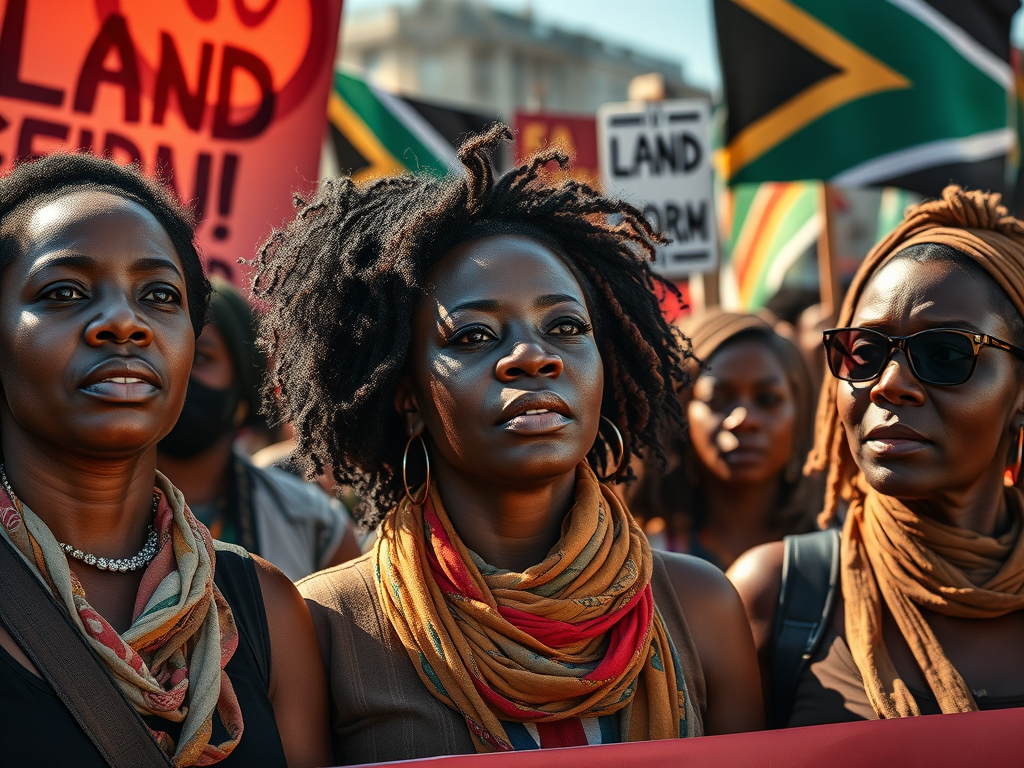
The past few weeks have seen an internationally politicized trend dominate world headlines: the United States’ groundbreaking incursion into interfering in South African land reform politics. The incursion, marked by an executive order apparently suspending American aid to South Africa and giving refugee status to white Afrikaners, has reactivated the long-standing controversies over historic injustice, economic reparation, and national identity. Supported in the public arena by the likes of Elon Musk, this policy initiative—in the context of South Africa’s controversial 2024 land reform bill—arises with profound questions about sovereignty, world power, and the future of racial and economic reconciliation in a post-apartheid nation.
This article delves into the background of South Africa’s land allocation history, the development of land reform policy, and the factors that have converged to make this U.S. engagement both timely and extremely controversial. We will address domestic political implications, the role of the international community in national policy-making, and the broader ripple effects for the African continent.

Historical Context of Land Policies in South Africa
Apartheid Legacies and Land Ownership
The struggle over land in South Africa is deep-rooted in the country’s apartheid past. Under apartheid (1948–1994), the state legitimized racial discrimination, giving preferential ownership of land to the white minority by excluding millions of Black South Africans. Core pieces of legislation such as the Group Areas Act and the Native Land Act of 1913 codified this asymmetry, creating a trajectory towards centuries of economic inequality and spatial injustice. The apartheid legacy has seen a number of initiatives to redress these historical injustices, including land restitution and redistribution programs to address past imbalances.

Post-Apartheid Reforms and the 2024 Land Reform Bill
Since the end of apartheid, South Africa’s different governments have sought to deal with the apartheid legacy of uneven land ownership. But efforts at reform have been contentious. The 2024 land reform bill was a departure from previous policies in suggesting expropriation of the land—well over half-owned by whites—with no compensation. Proponents argued that uncompensated expropriation was necessary for rapid social and economic transformation, whereas critics believed that it would destabilize agricultural production and investor confidence.
Land reform controversy distills not merely historic grievances but also urgent current needs for economic justice. It is into that delicate arena that outside influences have recently entered, adding a foreign factor to what many have so far regarded as a domestic debate.
Recent Developments: U.S. Executive Order and Its Ramifications
In a shock that left both local and international viewers agog, President Donald Trump signed an executive order that effectively suspended American foreign aid to South Africa. The policy also sent out an invitation to provide refugee status to white Afrikaners—a step seen by many as a direct interference in the affairs of South Africa. The action was defended in public as a response to South Africa’s 2024 land reform bill, which had suggested expropriation without compensation. This action, which has been widely supported by influential actors such as Elon Musk, was intended to represent a new form of external pressure on South African policy-making.
The executive order at a time when South Africa was intensely debating the future direction of its land reform has raised a few eyebrows. Such external intervention by critics is deemed to erode the sovereignty of the country and, worse still, could add to more internal conflict. Its supporters see it as a counterbalance against what they perceive as economically irresponsible policies that could undermine the stability of the country and foreign economic ties.
The intervention of a great world power into matters of domestic policy is not new, but is still highly contentious. South Africa, in the past, has had to play its way through a complex international setting—between anti-apartheid sanctions of the 1980s to post-apartheid re-integration with the international financial institutions. The latest intervention, however, appears to signal a shift towards the direction of how powers external may seek to shape courses of policy when economic nationalism and redress regarding the past cross the interests of global capital.
The popular endorsement by figures like Elon Musk adds another layer of complicity. Musk’s support is symptomatic of a broader reorientation among certain international business elites, who are convinced that radical policy shifts might destabilize global markets and warp investment trends. Under such conditions, the intervention is not merely a political move but also a deliberate action to preserve a particular vision of economic order.
Analytical Evaluation: Implications for South Africa and Beyond
Domestic Implications: The home political landscape of South Africa has been polarized for decades by the question of land reform. The 2024 land reform bill has emerged as a rallying point for criticism, with firebrand battles erupting between those that demand quick correction of historical injustices and those that warn of the perils of sudden economic change. The U.S. executive order has further entangled this dynamic by turning the debate into one that is outside. To the vast majority of South Africans, the concept of outside intervention—particularly one that encompasses a halt in foreign aid and recasting the refugee status—is antithetical to national sovereignty. Critics would maintain that the allowance of foreign governments to provide parameters for policy erodes national institutions and domestic politics as well as the democratic process. Land reform bill backers are particularly gripped by such an emotion, however, considering it a long-overdue necessity in order to set right a millennia of error.
Economically, a possible withdrawal or freezing of American aid would seriously affect South Africa’s development plans, the majority of which are under foreign aid. While the government has repeatedly reaffirmed its commitment to overseeing a fair land redistribution, economic isolation poses a real challenge. Socially, the policy carries the danger of reinforcing deep racial and ethnic cleavages. Only grant of refugee status to white Afrikaners can be taken as reinforcing existing rather than discarding historical hierarchies. The legal tradition surrounding expropriation without compensation is itself bitterly contested.
Constitution of South Africa enshrines property and the need for redress alike. This conflict of principles has led lawmakers and the judiciary to grapple with painful questions concerning the limits of state action for social justice. The American involvement might inspire homegrown critics to argue that outside legitimation of their apprehensions can undermine legal reforms aimed at furthering equality.

Broader Regional and Global Implications:
The US executive order could create a global precedent for international intervention in regional policy rhetoric, particularly in those countries that are finding it difficult to reverse the legacy of colonialism. If it is seen that foreign powers are directly dictating policy in nations that are trying to make amends for historic injustices, it may lead to increased geopolitical tensions across the entire African continent. This also raises questions about the limits of international diplomacy and the sanctity of national self-determination.
World financial markets are highly risk-sensitive to politics. The intervention has already raised fears in investors and multinationals regarding the possibility of rapid policy change that would undermine property rights and economic stability. This is not an unrealistic concern; previous examples of extremist land reform elsewhere in the world have always been preceded and followed by capital flight and market volatility. For South Africa, the fine balancing act of seeking historical justice while staying financially sound is a fragile one, and the American intervention may tip the scales in unexpected ways. While debate about reparations and redress for historical injustices are picking up speed across the globe, the South African model has a crucial place on the agenda when it comes to putting an end to centuries of injustice.The globalization of this debate—by an action of a United States policy that appears to side in an issue of historical interpretation—could set the tone for such debates in other African nations. Zimbabwe, Namibia, and even sections of West Africa with histories of colonialism would see South Africa as a guinea pig for the equation of local forces and international demands.
The Timing of the Intervention: Why Now?
Understanding why this intervention has occurred at this particular juncture requires a look at both domestic dynamics in South Africa and the broader international political climate.
Domestic Politics: There were passionate debates in the past few months in South Africa about how quickly and to what degree should land reform proceed. The enactment of the 2024 land reform bill was preceded when a progressively larger segment of the population demanded radical change to take place, while others were extremely concerned about its economic ramifications. The government’s attempt to strike a middle path between these two conflicting visions has been met with fervent support and fiery opposition. The U.S. intervention is seen as an influence that can further polarize a polarized nation.
International Politics: At the international level, there is increasingly a trend of extraterritorial actors articulating clear stances on issues that are relevant to their geopolitical interests. In the case of the U.S., the controversy over land reform in South Africa is an opportunity to promote a particular vision of economic liberalism and property rights—ideals at the center of its political culture. By moving ahead now, the U.S. is not just reacting to concern over destabilizing the economy of a key ally but also making clear its overall stance on post-colonial reform policies in areas of strategic concern.
Resolutions, Proposals, and Future Prospects: In response to both domestic protests and international criticism, various proposals have been made by various quarters in South Africa. Some policymakers are advocating a more gradualist approach to land redistribution—one that would allow for a phased process of expropriation with robust compensation mechanisms. Others advocate the continuation of the uncompensated expropriation model as a means of rapidly dismantling entrenched inequalities.
Global institutions and policy think tanks have also weighed in, that it is possibly only a balanced policy that could provide the only solution to balance opposing imperatives of economic stability and social justice. Whether such recommendations will find any takers or not remains highly unlikely, given the divisive effects of external intervention such as the recent U.S. executive order.
The US intervention in the South African land reform issue on the other hand is indicative of a broader trend where inherited legacies, contemporary political imperatives, and global economic interests all meet. It raises basic questions about sovereignty, external interference in the internal policymaking process, and the path of social and economic justice in post-colonial countries. Though the executive order may be seen by some as an economic stability shield, it is also seen as a threat to the hard-earned democratic and transformational desires of South Africa by others.
Ultimately, the drama that has been played out in South Africa is a clear reminder that land, legacy, and leadership are never local issues. As South Africa works its way through its traumatic past and its uncertain future, the world waits with bated breath because the echoes of those decisions will more than likely find resonance with arguments about justice and development on the African continent and around the world.
Leave a Reply