

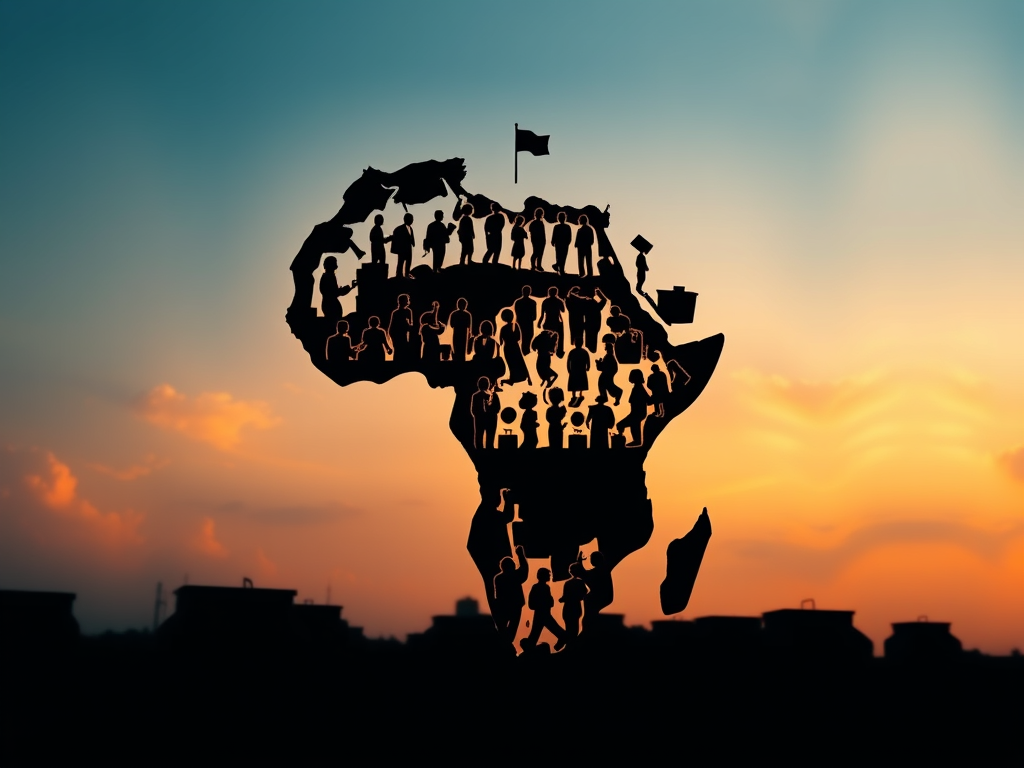
On February 15, 2025, a significant political event unfolded that promises to reshape the strategic direction of the African Union (AU): the election of Djibouti’s Mahamoud Ali Youssouf as the new Chairperson of the African Union Commission. Winning his seat after seven rounds of bitter voting, Youssouf’s election is at a moment of heightened tensions and conflicts across the continent—ranging from the persistent Sahel crises to the acute security threats in zones such as the Democratic Republic of Congo (DRC) with the M23 offensive. This piece examines the historical evolution of the African Union Commission, political trends that led to Youssouf’s election, and the potential implications of his leadership for the continent.
Historical Context: From Pan-Africanism to the African Union
The idea of a unified Africa traces its origin to the pan-Africanist movement, which emerged in the early twentieth century as a response to colonial exploitation and racial discrimination. Pan-Africanists such as Kwame Nkrumah and Julius Nyerere promoted the idea that African unity was not only required for political independence but also for economic development and cultural renaissance. These ideals later became the foundation for the creation of the Organization of African Unity (OAU) in 1963 with the objective of promoting solidarity among newly independent African states.
Following decades of changing geopolitical relations and the urgencies of concordant economic and security strategies, the OAU was reformatted in 2002 as the African Union. The AU was envisioned not just as a political organization but as an agency of socio-economic renaissance, peace preservation, and promotion of democratic leadership. The African Union Commission (AUC) as the secretariat to the AU has assumed a frontline role in synergizing these goals.
Over the past two decades, the AUC has been at the forefront of addressing issues ranging from electoral reforms in member states to conflict resolution in war-torn regions. Despite facing criticism over bureaucratic inefficiencies and limited resources, the commission has made notable strides in promoting peace and economic integration across Africa. Its choice of Chairperson is therefore a matter of great interest, with the role being seen as playing a pivotal part in leading the organization’s policies and strategies at a time when the continent is faced with challenges of unprecedented proportions.

The Election of Mahamoud Ali Youssouf: Recent Developments
The February 15, 2025, election was surrounded by a prolonged and disputatious process. Seven rounds of voting—a testament to deep cleavages as well as stakes—elapsed before Mahamoud Ali Youssouf emerged as the consensual candidate. His election was not merely a routine change of government; it was a watershed that emphasized the need for fresh leadership in reaction to the emerging threats such as the M23 rebellion in the DRC and political instability in the Sahel.
Youssouf’s background of diplomatic experience and vision for continental integration positioned him as a contender who would not only be well-equipped to address the political issues of the AU, but would also be prepared to handle the various interests of the 55 member states. His campaign featured a strategic focus on conflict resolution, institutional building, and closer economic cooperation between African nations.
There were some significant moments that marked the electoral process. Specifically, the several rounds of balloting highlighted the deep divisions between the AU’s leadership elite. There were member states that preferred more conservative policy-oriented candidates and other member states that desired a reformist leader with a powerful reform agenda. Youssouf’s final win can be attributed to his ability to muster support from large constituencies, particularly by appealing to countries most affected by recent wars and countries eager for institutional reform.
The protracted length of the voting process—spread over several sessions over the course of a few days—mirrored the heavy stakes involved. The perception was that the election was as much an election about selecting the future course of AU policy as it was an election about selecting a symbol. Youssouf’s election has in this sense been interpreted as a mandate for change, and one that shows member states are ready for a leadership that prioritizes both internal reform and proactive external engagement.
Analytical Evaluation: Implications for the African Continent
The election will have short- and long-term implications for member states. Domestically, the majority of African governments view the AU as a platform for policy coordination to address issues such as terrorism, economic stagnation, and health epidemics. Youssouf’s promise of reform could translate into more assertive AU intervention in member state affairs, particularly where governments are plagued by internal conflict or aggression from the external world:
Among its primary duties is the management of conflicts within and among member states. With contemporary issues like the M23 incursion in the DRC, Youssouf’s chairmanship could mean a new policy of peacekeeping and diplomatic intervention. His experience suggests that he will demand increased resource allocation towards conflict zones and more coordinated responses from member states.
Its critics have been clamoring for institution-building reforms aimed at addressing the issue of bureaucratic inefficiency as well as insufficient transparency for many years. Yourssouf’s election is a potential game-changer as far as that is concerned. Through prioritizing accountability and decentralizing administrative functions, he may be able to help the AU recover its image on the continent as well as abroad. Such an improvement in image would ultimately help the union improve its ability to attract international investment as well as secure global development partnerships.
Continental Implications: Political and Economic Integration
Essentially, the AU was established to attain unity out of the multiplicity of states with varying political systems, economic models, and cultures. Youssouf’s presidency will probably concentrate on an integrating vision beyond these differences. His style can potentially bridge the gap between past power centers and emerging democratic forces, thereby strengthening the integrationist continental agenda. This is particularly critical because Africa is open to external influences—from changing world economies to climate change—that must be confronted collectively. When the balance of power in the world is shifting rapidly, the AU must leave its imprint on the international stage.
Youssouf’s diplomatic abilities will be a significant asset in this regard. Through establishing more solid relationships with international partners—while simultaneously promoting African interests—he can help ensure that the continent is heard in global economic and political forums. This is especially relevant in the wake of recent foreign intervention scandals, as seen with South Africa’s land reform fiasco. The goal of economic integration is a major objective for most AU initiatives, including the roll-out of free trade agreements and regional infrastructure initiatives. Under the leadership of Youssouf, there are expectations that the AU will introduce more aggressive policies to drive economic growth and mark the end of dependence on foreign aid. By promoting intra-African business and innovation in fields such as renewable energy and digital technology, the new leaders can help provide the stage for sustainable economic development across the continent.

The Context of Ongoing Crises and Security Challenges
That Youssouf has been elected at this moment is particularly important as Africa is grappling with so many crises. The M23 assault in the DRC, for instance, underscores the fragility of state control in conflict-prone regions. In the Sahel, where terrorism and political instability have taken hold, the AU has never been needed as a cohesive and effective body.
The M23 Offensive: The return of violence by the M23 rebel group in the eastern DRC has not only threatened regional stability but also exposed the weakness of existing peacekeeping interventions. Youssouf’s term may bring in its wake a more unified and robust response to such insurrections, including diplomatic pressure on foreign sponsors and more military aid to victim nations.
Security in the Sahel: The Sahel region is still a hub of extremist activity, and several member states are struggling to curb the spread of terrorism. The AU’s role in mediating multilateral security agreements and facilitating the exchange of intelligence is critical. Youssouf’s election is seen by many as an opportunity to consolidate these mechanisms, which in the long term will make for a safer, more resilient region.
Evaluative Perspectives: Challenges Ahead
Despite the optimism enveloping Youssouf’s mandate, the road ahead still presents a great deal of challenge. The AU will be dealing with an imposing terrain marked by clashing national interests, ongoing colonialist reminders, and global pressures. Among the overriding challenges are:
Convergent and Divergent National Agendas: The 55 member states of the AU have divergent political, economic, and cultural agendas. Consensus on reforms and action will have to be negotiated with care and an openness to compromise. Youssouf’s ability to trust and bring others together in collaboration will be tested as he tries to implement his vision of a more integrated and responsive union.
Institutional Inertia: The AU has for a long time been opposed to reform, trapped in bureaucratic resistance and change aversion. Institutional reform will require political will, but also a reconfiguring of deeply rooted power dynamics in the union. The path forward will be fraught with internal resistance, potentially watering down the rate of change.
External Pressures: The geopolitical reality of the times is one of increasing rivalry among global powers. With Africa increasingly becoming a theatre of influence war among major global players, the AU must tread carefully in its relations to avoid being manipulated by external players. Youssouf’s diplomatic strategy will be required to navigate independence and collaboration, making sure that the continent’s interests are not relegated to second place behind any single external player.
Conclusion
The election of Mahamoud Ali Youssouf to be Chairperson of the African Union Commission is a defining moment for the continent. His leadership is widely seen as a call to change—a mandate to reform the institutions, stronger mechanisms for conflict resolution, and a more vocal African voice in international affairs. At a time Africa is faced with intricate problems ranging from insurgencies to economic vulnerabilities, Youssouf’s vision of a united, powerful, and economically successful continent offers a cause for hope.
But the road ahead will be challenging. Coordinating the competing agendas of member states, breaking bureaucratic logjams, and navigating a volatile world order will require not only political acumen but also allegiance to the principles of pan-African unity and social justice. As the African Union charts its future under Youssouf’s chairmanship, the entire continent—and indeed the world—will be watching to see whether his leadership can translate aspiration into concrete and lasting progress. Youssouf’s election is not just a leadership transition but a moment of definition for the African project itself. If he succeeds or fails, it will determine the course of continental integration, economic development, and peacekeeping for years to come. As Africa grapples with both its legacy from the past and the demands of an ever more rapidly changing world, this new Youssouf-led mandate for unity and reform can prove to be one of the most important developments in the region’s recent history.
Leave a Reply