

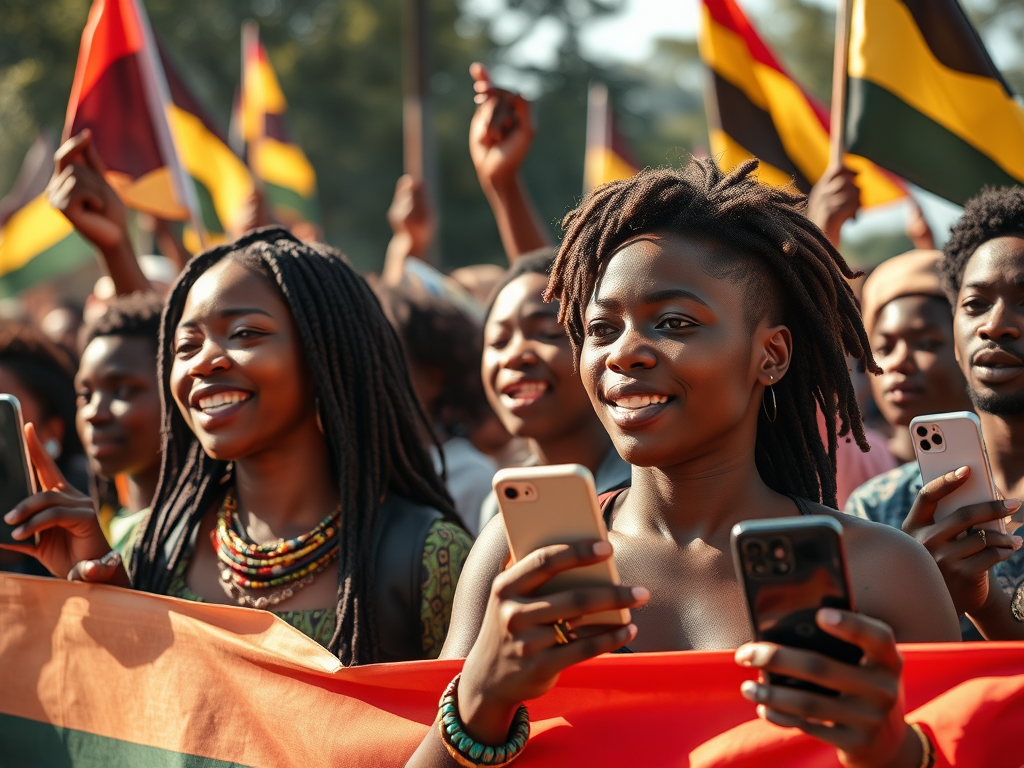
Africa is widely recognized as being the youngest continent in the world. The United Nations documents that nearly 60 percent of the population of Africa is under the age of 25, and so the youth not only constitute the demographic majority but are also an effective force for political transformation. In recent years, youth-led movements—from Nigeria’s #EndSARS protests to social movements across the continent—have made one thing clear: young Africans will no longer accept traditional modes of governance. This article critically examines the rise of youth leadership in Africa, the dynamics by which political participation is being reconfigured, the challenges that remain, and the questions policymakers must ask as they seek to harness the potential of Africa’s future generation of leaders.
The Demographic Dividend: Youth as a Catalyst for Change
Africa’s youthfulness is a curse and a blessing. With its estimated 60% of its population under the age of 25 years, the continent has an unimaginable quantity of human capital. This “demographic dividend” can bring economic growth and technological innovation—if accompanied by proper education, political, and economic policies. But it also comes with one very large headache: youth unemployment. For instance, the African Development Bank argues that rates of youth unemployment in some African countries are more than 30%, a rate that underscores the imperative to create meaningful political and economic participation channels.

In the last several years, several high-profile youth-led movements have captured international attention. Nigeria’s #EndSARS protests, which began in 2020, placed international pressure on issues of police brutality, corruption, and government accountability. The protests were led primarily by young citizens who used social media platforms to mobilize, organize, and demand reform. Similar movements have taken place in other countries such as Zimbabwe and South Africa, where youthful activists are protesting for policy changes on issues ranging from electoral accountability to social justice. Not only do such movements demonstrate growing political consciousness among young Africans, but also challenge deep-seated hierarchies of governance. Harnessing the power of online platforms, young leaders have managed to circumvent traditional power bases, demonstrating that political influence is possible without holding formal office. This raises important questions: How can governments better incorporate the voices of young people into formal policy making? And what are the steps toward converting online mobilization into lasting political transformation?
Although the youthful nature of youth-led movements is evident, institutional processes for political participation are still unequal on the continent. Some governments in certain countries have made extra efforts to bring mainstream youth participation into formal decision-making. An example is the African Union’s adoption of the African Youth Charter and initiatives like the African Peer Review Mechanism (APRM), which has sought to ensure greater transparency and accountability through the involvement of youth representation in governance. However, in the majority of cases, youth participation is symbolic rather than substantive. Significant questions arise from this chasm. Are current institutional mechanisms sufficient to translate the energy of youth movements into long-term policy reforms? What type of structural reforms are necessary to bridge the gap between online activism and traditional political engagement? It is necessary to respond to these questions, especially in light of the need for long-term economic growth and political stability.
Case Studies: Successes and Setbacks
A closer examination of individual countries provides valuable insights into both the successes and challenges of youth political participation in Africa. Nigeria’s experience with the #EndSARS movement is a paradigmatic example of youth mobilization shaping political discourse. The protests, which saw millions in the streets and millions more on social media, forced the government to disband the SARS unit and commit to reforming policing culture. But the aftermath also revealed underlying problems. While the initial promise was given, follow-up reforms have been slow, and the majority of young activists are disenchanted by the lack of structural reform. The Nigerian experience raises the critical question of how states can move beyond symbolic action to enact meaningful, enduring reform. South Africa on the other hand boasts a strong history of youth activism, from the anti-apartheid struggle to recent demonstrations against corruption and inequality. Youth engagement is seen today in electoral politics and civil society. However, issues persist—particularly with regards to converting activism into long-term policy influence. As youth unemployment skyrockets and economic opportunities dwindle, many young South Africans believe they are locked out of the decision-making process. This fact provokes more inquiries: What are the models of youth inclusion in government that can serve as a blueprint for other nations with the same conditions? Rwanda is among the few African nations that have institutionalized youth participation to a large extent. The government has policies that encourage youth representation at both the national and local levels. Through programs focused on education, entrepreneurship, and leadership, Rwanda has seen progress in areas such as job creation and civic engagement. However, critics retort that while the youth are visibly represented in government institutions, substantive disagreement and debate are sometimes stifled under a political culture with little room for opposition. This speaks to a broader debate on the trade-off between inclusion and the need for vigorous political contestation.

Key Statistics and What They Indicate
Statistics are crucial when understanding the African youth participation trends. For example: More than 64% of Nigeria’s population is less than 25 years old. Unemployment among the youth in Sub-Saharan Africa accounted for approximately 12.4% in the year 2020, and that is very much above the global average as reported by a publication by the International Labor Organization. A South African survey found that nearly 70% of the young believe that political leaders do not represent their interests. These numbers highlight the call for reform. They are also a plea: How can governments unlock the potential of a youth population that is statistically disenfranchised in economic and political terms?
Barriers to Political Participation
Several barriers hinder effective youth participation in political processes. Among the most significant are:
Structural Barriers: Africans’ political systems are so structured that they discriminate in favor of older elites by themselves. Electoral politics, party politics, and even constitutional building in some countries all appear to serve the purpose of excluding young people. To be added to this challenge of representation is a socio-economic underclass that lacks as many resources from which to compete as do young elite entrants entering into their world. Reduced access to quality education and financial opportunities further excludes youth. When youth are unable to secure jobs or acquire the skills needed for career advancement, their potential to engage in effective political discussion is significantly diminished.
Digital Divide and Information Access: While online platforms have played a pivotal role in galvanizing the youth, the digital divide poses a serious problem. Rural communities and less-developed regions may not have the technological capacity required for productive participation online. The gap not only restricts information access but also perpetuates already existing power differences.
Cultural and Social Norms: In the majority of African cultures, societal and conventional norms appreciate more experience and age. This is likely to negate the voice of young citizens because they would probably be viewed as lacking the knowledge or authority essential for political participation. These viewpoints are slowly evaporating but have not completely been eliminated as major obstacles to widespread youth participation.
Policy Solutions and the Way Forward
Such immense potential dictates that policymakers focus on a multi-faceted approach to engaging more politically:
Institutional Reform: Institutions of politics must be changed to accommodate increased youth representation. This can be achieved by legislating changes in election laws for greater representation to young politicians and by creating certain platforms for young people to take part in political parties and state institutions.
Investment in Skills Development and Education: Governments and international institutions must prioritize education and vocational training schemes that equip young people with the skills necessary to participate in the political process. Investment in education not only enhances employability but also nurtures a culture of civic involvement and critical thinking.
Closing the Digital Divide: Increased availability of the internet and increased digital literacy are a necessity. Investments in infrastructure—more so in rural areas—will ensure that young people have the hardware to participate in online political discourse, retrieve information, and mobilize effectively.
Fostering Civic Engagement: Civil society organizations, youth organizations, and learning institutions should get together to set up debate and discussion forums. The forums can then be utilized as incubators of new ideas as well as spaces where young people can engage directly with policymakers.
International Assistance and Cooperation: Donor agencies and international organizations need to support programs that develop youth leadership in Africa. United Nations, African Development Bank, and other multilateral institutions’ programs can provide the finance and technical support required to implement reforms.
Provocative Questions for Further Debate
Considering the context of youth political participation in Africa, certain essential questions emerge:
How could Africa balance the demand for youth energy with the experience and expertise of older, seasoned leaders in an inclusive, productive way? What specific reforms to election and constitution law would most enfranchise the youth and ready them for taking on leadership? How could the politics of social media activism be institutionalized so as to mobilize the people into the movement and transform the fleeting movement of the masses into more enduring changes in policy? What approaches can regional organizations like the African Union take to build cross-country youth networks that facilitate knowledge exchange and collective action?
Conclusion
African youth leadership and political participation are a key frontier in the political evolution of the continent. Since most of the population is under 25, Africa possesses demographic capital to drive rapid social and political change—subject to implementing the right institutional reforms and economic investments. Despite setbacks such as unemployment, structural bias, and the information gap remaining, the dynamism of youth movements provides hope and inspiration for the future. The debate does not end here. As African nations grapple with the complexities of development and leadership, the role of youth shall be at the center. All concerned, that is, policymakers, civil society, and the international community, must come together to ensure that the human capital of African youth is maximized to its potential. Then and only then can Africa harvest its demographic dividend to build an open, innovative, and democratic society.
Leave a Reply