

Introduction
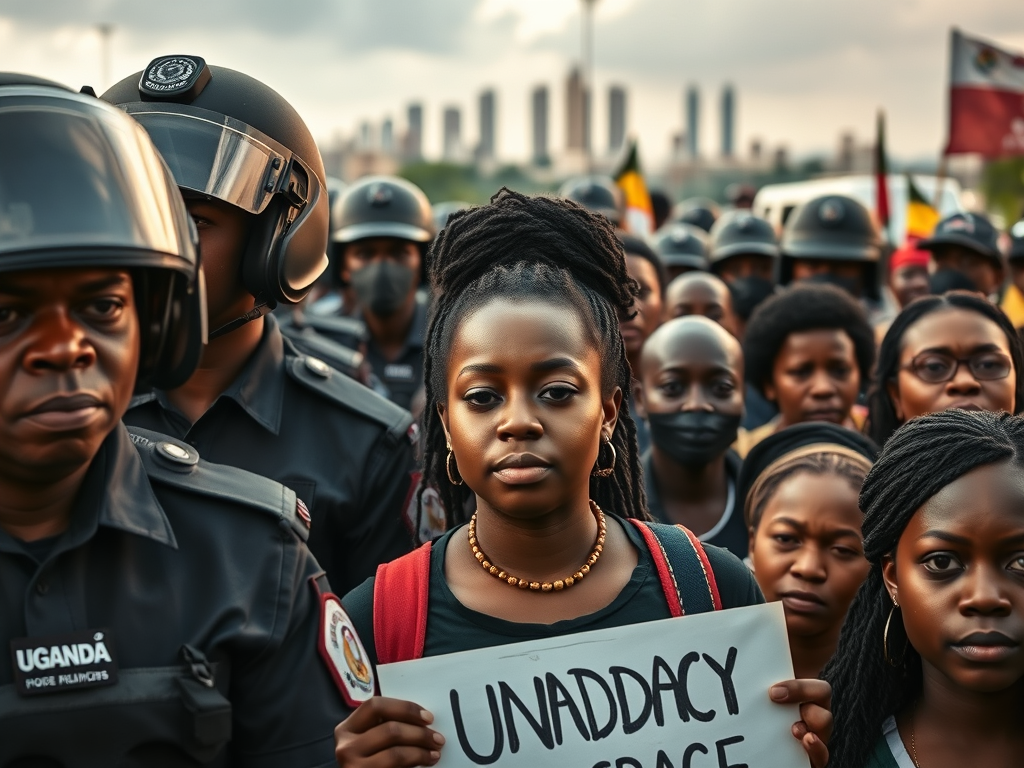
Uganda’s 2026 general election is viewed globally as a make-or-break moment for Uganda’s commitment to democracy, human rights, and the rule of law. Events of the recent past have underscored growing concerns over election violence, police brutality, and opposition voices being silenced. As tensions increase, the behavior of security forces, government, and political players will be a good barometer of Uganda’s democratic trajectory. The term “litmus test” in this case refers to the political and security developments leading up to the elections to show whether Uganda is prepared for a free, fair, and peaceful electoral process or if it will become violent, repressive, and unstable.
History of Electoral Violence in Uganda
Uganda’s electoral history has been extensive and characterized by electoral disputes in which rigging, intimidation, and suppression of opposition candidates were alleged to have taken place during earlier elections. The 2001, 2006, and 2011 elections saw instances of alleged irregularities reported, leading opposition candidates such as Kizza Besigye to take court challenges. During the 2016 elections, the European Union Election Observation Mission (EU EOM) reported that the process lacked transparency and was characterized by interference by the state.
The 2021 general elections saw even greater repression, particularly against opposition leader Robert Kyagulanyi, commonly known as Bobi Wine. His campaign processions were regularly disrupted by security agents, and he was arrested multiple times. In November 2020, during a campaign rally in Luuka District, security agents arrested Bobi Wine, an action that resulted in nationwide demonstrations which cost at least 54 lives, said Human Rights Watch. Both the Uganda People’s Defence Forces (UPDF) and the Uganda Police Force were explaining the action under the pretext of maintaining public order, but the critics view that the intention was to act strategically to emasculate political opposition.
The use of disproportionate force, such as live bullets, tear gas, and mass arrests, has become a hallmark of Uganda’s election landscape. The Electoral Commission, which is in charge of the conduct of a free process, has been accused of bias towards the sitting National Resistance Movement (NRM). Such trends of electoral violence raise doubts about Uganda’s ability to conduct credible elections in 2026.

Recent Political Tensions and Repression
Recent developments have raised red flags regarding the state’s willingness to implement democratic ideals. On 3 March 2025, security organs, including the police, Joint Anti-Terrorism Taskforce (JATT), and the Uganda People’s Defence Forces (UPDF), reportedly used excessive force against the National Unity Platform (NUP) supporters in Kampala. The supporters had gathered to participate in a procession to a campaign rally for Erias Luyimbazi Nalukoola, the NUP flag bearer in the upcoming Kawempe North by-election. The peaceful procession turned violent as it left many injured and multiple NUP members arrested.
This is not an isolated event but fits into the broader pattern of state repression against opposition voices in Uganda. The Kawempe North by-election, scheduled to be held on March 13, 2025, is being watched closely as a microcosm of what the general elections would look like. If security agencies continue with the use of violence against opposition supporters in local by-elections, then it foretells a high degree of violence to attend the 2026 elections.
Apart from physical repression, leaders of the opposition also face legal and bureaucratic hurdles. Dr. Kizza Besigye, a four-time presidential candidate, has been charged with offenses ranging from treason to inciting violence. Bobi Wine has also been placed under house arrest multiple times, with the security agencies cordoning off his residence under the guise of maintaining peace. All these serve to create a toxic political atmosphere in the lead-up to the elections.
The Shrinking Democratic Space
As the 2026 elections draw near, the worry is that the repression can only intensify. Historically, Uganda’s election violence has been driven by the state’s fear of losing power. The NRM, which is the governing party, has been in power since 1986, and President Museveni has repeatedly changed the constitution to remain in power. The abolition of term limits for presidents in 2005 and the removal of the age limit in 2017 paved the way for Museveni to remain in power for life.
The young population, which is over 77% of the population in Uganda, is particularly disenfranchised by this extended incumbency. A majority of young Ugandans feel that their aspirations are thwarted by the lack of political and economic space. Unemployment, at around 13.3%, has seen most turning to opposition parties that promise change. However, security forces have repeatedly dispersed youth-organised protests, further lowering civic engagement.
One of the most glaring mirrors of Uganda’s shrinking democratic space is the stark difference in how security agencies handle opposition supporters and those sympathetic to the government. While opposition gatherings are met with violence, processions and rallies by NRM politicians continue largely uninterrupted. Candidates for the government enjoy unfettered access to campaign spaces, and their supporters are not confronted with the same levels of harassment or police action. This selective application of the law erodes public confidence in state institutions, reinforcing perceptions that the police and military are a wing of the ruling party and not neutral faulters of law and order.

The Role of Media and Internet Censorship
The suppression of dissent is not just limited to street confrontations. Media censorship and internet shutdowns have also been employed as tools of repression. Social media sites were shut down and internet blackouts were effected during the 2021 elections to stifle the flow of election news. Journalists who reported on opposition rallies have been arrested, intimidated, and physically attacked.
The Uganda Journalists Association (UJA) documented over 20 cases of journalists being assaulted by security personnel during the 2021 election period. The Uganda Communications Commission (UCC) has also been criticized for selectively suspending the licenses of media outlets critical of the government. With 2026 on the horizon, there is growing concern that the government will once again resort to digital repression as a means of controlling the narrative and silencing oppositional voices.
The Risks of Political Instability
Beyond the immediate political implications, the increasing recourse to violence against opposition figures has broader implications for stability in Uganda. The militarization of politics establishes a culture in which the use of violence as a means of resolving political disputes is normalized. If citizens lose faith in democratic institutions, there is a risk that marginalized constituencies will resort to extralegal means to express their discontent.
Already, the likelihood of increased state repression galvanizing underground resistance elements or unleashing sporadic violence in various parts of the country cannot be ruled out. Mass demonstrations, civil disobedience, or even armed struggle can also not be ruled out if the electoral process itself is perceived to be irrevocably discredited. There were acts of violence during the 2021 election season in Kampala, Masaka, and Jinja, causing hundreds of injuries and dozens of fatalities. If the process is not made fair by the government in 2026, the repercussions may be even greater.
The Role of the International Community
The international community also plays a role when it comes to monitoring and influencing Uganda’s political process. In the past, bodies such as the European Union, the United Nations, and the African Union have condemned voting malpractices and mistreatment of human rights. Their efforts, however, have typically ended at issuing statements of condemnation without going ahead to take tangible steps. Diplomatic pressure, targeted sanctions against officials implicated in human rights violations, and increased monitoring of Uganda’s security forces can serve as deterrents to further repression. International election observers must also be granted full access to monitor the 2026 elections to bring transparency and credibility.
The Power of Youth and Digital Activism
For Ugandans, especially the young people, the next election is a defining moment for the future of the country. The youth make up the largest portion of Uganda’s population, but their voices have been excluded from the processes of governance in the past. Political indifference and fear of reprisals from the state have largely discouraged youths from active participation in political activism. Yet with the advent of social media as a mobilization tool, Ugandan youths have been capable of discovering novel ways of circumventing traditional hindrances to political participation.
The struggle for Uganda’s democracy is not just about the 2026 elections; it is about the broader struggle for governance that respects human rights, advances the rule of law, and fosters inclusive political participation. The world is watching, and the choices made over the course of the next few months will determine the fate of Uganda’s democracy for generations to come.
Leave a Reply