

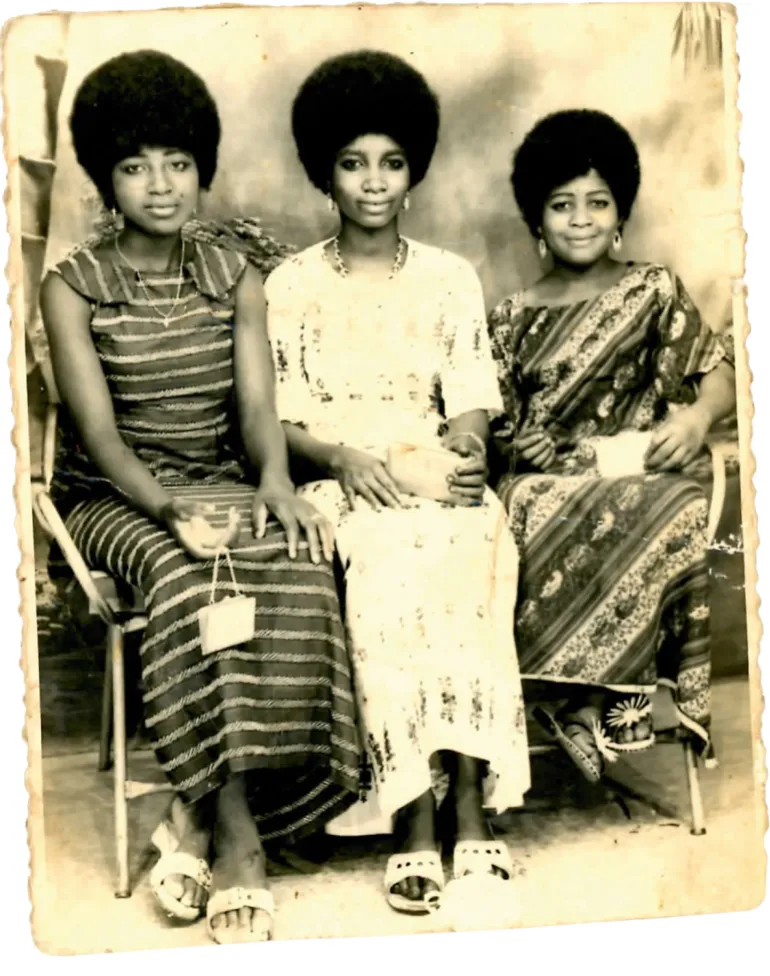
I always look forward to Women’s Month—March because it’s a time to celebrate the power, resilience, and impact of women throughout history. It’s an opportunity to inspire young girls, showing them the limitless potential they hold and the incredible ways women have shaped the world—breaking barriers, rewriting narratives, and challenging systems. This piece is a tribute to the strength and brilliance of women past and present. And to our dear male readers—this journey is for you too. Welcome aboard!
There’s a great deal to unpack when discussing women’s roles in society, and still many stereotypes to challenge. Today, however, I’d like to explore the role of women in the past versus today. It’s truly fascinating to see how much has changed, especially in recent years, with progress happening at a faster pace than ever. This idea struck me when I came across a book by a male African pastor titled “A Woman of Value”, where he outlined a woman’s role in various aspects of life—her home, her kitchen, as an unmarried woman, a widow, and even in her marital bedroom. The list was extensive, providing what felt like a set of guidelines or rules for women. My sense, however, is that many women today may find it difficult to connect with this viewpoint. The cultural framework it drew from, while important in preserving tradition, doesn’t quite align with the values of today’s generation. And let’s be clear—preserving culture is crucial, as long as it remains uplifting and beneficial to the community. But in today’s world, we no longer hear statements like “a woman’s sole purpose in the home is childbearing,” or “there’s no need to educate a girl because her life’s purpose is to serve her husband and children.” Times have changed, and with that, so has our understanding of what women’s roles can and should be.
With that in mind, let’s take a deeper dive into the roles women held in traditional African societies—roles that, in many ways, continue to shape the lives of women among us today.
This story draws from the rich tapestry of my own family’s history, the narratives passed down from the women who came before me, and the world they lived in. While this may not resonate with every African experience, I believe that if you’re from a family of first or second-generation girl-child education—you’ve likely heard tales from your parents or grandparents about how things were in their time. Back then, the journey of a young girl began in the kitchen. As soon as she could move around and understand, she was introduced to the art of cooking and homemaking. The goal was clear: she had to master the traditional dishes as early as possible. The young girl would be sent around while mum did chores, and after a lesson or two, she was expected to step in and take over. By the age of eight, many girls could prepare an entire meal for the family, using the traditional skills passed down through generations. But it didn’t stop there. The girl wasn’t just learning to cook; she was expected to cultivate the food, planting, tending, and harvesting the crops before turning them into a meal. You might wonder, how did they have the time for all of this? The answer lies in the prevailing belief that educating the girl child wasn’t a priority. Instead, the focus was placed on educating the boys, who were sent to school to gain knowledge, build status, and, in turn, add weight to the family name. This wasn’t just a routine; it was the shaping of an entire future for a young girl—a future that often had no place for education beyond homemaking.

After being married off, typically in her late teens or early twenties, not much changed. It was essentially the culmination of all that a young woman had been trained for, and now it was time to execute how much she had learned. A significant expectation, though, was childbearing. If there was one area where a woman’s value was measured in those days, it was by how many children she could bear—especially male children, who were seen as the pride of the home. The pressure was immense for women to produce offspring, and those who struggled with infertility faced immense hardship. In some cultures, barren women were labeled as ‘cursed’ and were even divorced or subjected to harsh punishments. Ironically, it was never considered that men could also be infertile. A wife’s role, therefore, was to bear as many children as her husband desired, often with a preference for beautiful, even numbers. She had no dreams of her own, as success for a woman was defined solely by her ability to bear children. Any semblance of ambition outside of that was considered secondary, and at best, with her husband’s permission, she might run a small business—selling produce, tailoring clothes, or braiding hair. Even then, whatever income she made, no matter how small, was expected to go back into feeding the family. In raising children, any misbehaviour was blamed on the mother, while good behaviour and positive traits were attributed to the father, a phenomenon I’ve never fully understood.
Her role continued unrelenting for the rest of her life, even as she grew into a grandmother. The dynamic didn’t change. A typical day for a 20-year-old, would be wake up at 4:00 a.m. – prepare a heavy breakfast for the husband and children so he could eat before heading to work – by 6:00 a.m., set off to the garden with the children (toddlers carried on her back with a lesu for manageability) – return to the homestead at 1:30 p.m. and quickly prepare lunch – after lunch, do all the other chores like laundry, sweeping, grinding, sorting, and processing produce, plus any compound work – rest or catch up with a neighbourhood friend – have supper ready for the husband and children by 7:00 p.m., pre-prep the next day’s breakfast or lunch – sleep, and repeat.
The transition to the next generation brought a pivotal shift, thanks to the emancipation of the girl child and the introduction of ‘formal’ education—an education that had been brought by colonialists and missionaries. This transformation took root in the 40s and 60s in Uganda. More and more families were encouraged to send their children, including their daughters, to school. This was further reinforced by the establishment of single-sex girls’ schools across the country. Education opened new doors for women, making them more assertive, aware of their potential, and conscious of the societal constraints they faced. Yet, despite these new opportunities, traditional roles at home remained firmly in place. These young women found themselves balancing the heavy demands of school with the responsibilities expected of them at home. This meant waking up well before dawn to do chores, then trekking to school—often 5 to 10 km on foot or by bicycle—before the heat of the day set in. Many of us have heard our parents’ stories about swimming across rivers or navigating mountains just to get to school. While those tales may sound like folklore, they hold a deep truth about the struggles they endured to seize the opportunities education offered.

Therefore, pursuing education during this time was no small feat. The obstacles were immense, and to make matters worse, when these girls reached adulthood—usually after 18—they were often seen as ‘problematic’ for wanting to use their education to carve out careers for themselves or for speaking up against societal norms and stereotypes. For many, the pursuit of education was just the beginning of their journey. Some chose to start families first, then ventured into small businesses or fought for leadership roles within their communities. Others prioritized their careers, and later, a family. Others would pursue their careers first and then proceed to acquire a family. We had women vying for leadership in the church, in the government, in business, in institutions of learning and so many more. And even though the representation was not palpable, it is needless to say that they had a thirst for what was kept from them. Of course, many women still chose to stay within the traditional confines of the home, which was perfectly fine as it reflected their own desires. A typical day in the life of a 20-year-old woman during this time would be: wake up at 4:00 a.m. – prepare breakfast – help in the garden – hurry home to wash up – pack a lunch – head to school by 7:00 a.m., walking briskly to cover as many kilometers as possible – study until 4:00 p.m. – rush home to assist with chores – make supper – sleep – repeat.
This was truly a transformative time for women in Africa, and it’s important to pay tribute to the trailblazers who reshaped history. From the 1950s to the late 1980s, women across Uganda, East Africa, and the continent faced immense opposition as they pursued education, leadership, and activism. They were often labeled ‘unruly’ for daring to defy traditional gender roles. Sarah Ntiro, Uganda’s first female university graduate, rejected societal pressure to pursue education, becoming the first woman university graduate in East and Central Africa from Oxford University. Florence Alice Lubega, Uganda’s first female Member of Parliament in 1962, faced resistance for stepping into a male-dominated political space. Princess Elizabeth Bagaaya, Uganda’s first female lawyer and later Foreign Minister under Idi Amin, was criticized for embracing both professional and royal duties. Rhoda Kalema, a Ugandan politician, was imprisoned under Amin’s regime for advocating women’s rights. In Kenya, Wambui Otieno, a freedom fighter and activist, challenged both British colonial rule by being one of very few Mau Mu leaders, as well as challenging post-independence patriarchy. Miriam Makeba, the South African singer and anti-apartheid activist, was exiled for speaking against racism and injustice. These women, despite facing imprisonment, exile, and social rejection, laid the foundation for future generations of African women in leadership, law, politics, and activism.
Moving forward, we transition to a time where education became a first priority—very close to my own generation, I’d say, so I’m glad to have witnessed and experienced it myself. We had and have women moving away from traditional roles and abandoning most of them to prioritize education. Conveniently, even parents, especially fathers, came to this realization and made it their sole aim to ensure their daughters went to school. It was due to the encouragement of several local and international organizations pushing to ensure that community members are aware and are actually sending the girl child to school. In Uganda, for example, the government introduced Affirmative Action policy in the governance of higher education. From 1991, qualified women were entitled to bonus points of 1.5 for college admission; the purpose of which was to increase the participation of women in higher education. And now, we have a generation of assertive, powerful women in all walks of life. We have women leading in politics, the church, governance, business, and so much more. We also have women dedicating their lives to pushing for women and girl child empowerment.
This isn’t the cringe man versus woman narrative, but it’s refreshing to see that we’re moving away from the outdated belief that a woman can’t do what a man can. And yes, women haven’t forgotten their traditional roles; in fact, I believe they’ve mastered the art of balancing both. They’ve found ways to be the homemakers they’ve always been while simultaneously pursuing careers, businesses, and personal passions. The day in the life of a 20-year-old woman has shifted dramatically and now looks very different for most. Some wake up at 4 a.m. to revise for school, while others head to work or chase other ambitions. Each path is unique—whether it’s building careers, running businesses, or maintaining traditional roles, which is perfectly fine. Even though certain stereotypes persist in some parts of the world, they no longer hold the power to stop little girls from dreaming big. Yes, some women are still considered ‘problematic’ or ‘too loud’ for breaking the mold, but the only direction we’re moving in is forward.
From the 1990s to the 2000s, Ugandan, East African, and African women continued to challenge societal norms through politics, activism, and leadership. Winnie Byanyima, Uganda’s first female aeronautical engineer, became a global advocate for democracy and women’s rights. Miria Matembe boldly exposed corruption and gender-based injustices. Dr. Sabrina Kitaka, a pioneering Ugandan pediatrician, defied gender stereotypes in medicine and became a powerful voice for adolescent health. In Kenya, Prof. Wangari Maathai was beaten and jailed for fighting deforestation, yet she went on to win the 2004 Nobel Peace Prize. Millie Odhiambo, a fearless Kenyan MP, has earned a reputation for her unapologetic stance on women’s rights, justice, and constitutional reforms, often clashing with male politicians. Ellen Johnson Sirleaf endured imprisonment to become Africa’s first female president from 2006 – 2018, leading Liberia out of civil war and winning the 2011 Nobel Peace Prize alongside Leymah Gbowee, who mobilized women to demand peace. The list is endless.

Women have long shaped society with resilience and strength, breaking barriers and redefining roles. While progress has been made, the journey is far from over, and the future holds even greater possibilities, even for you, our dear reader.
Leave a Reply