
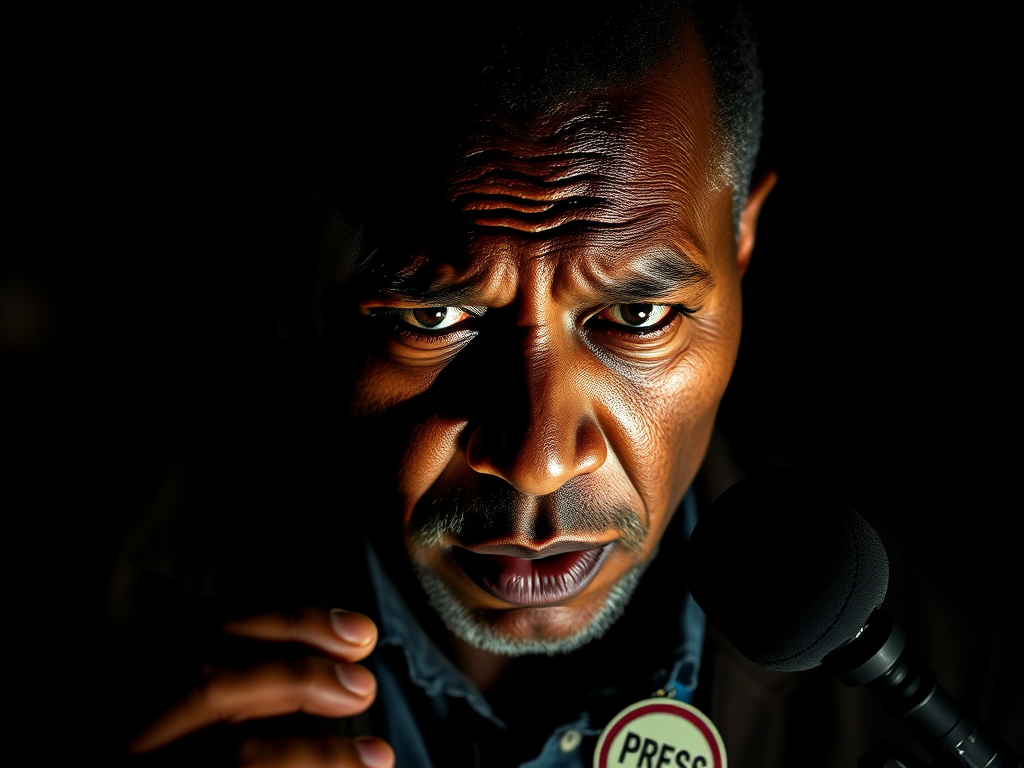
Throughout 2024, Uganda’s press freedom landscape has remained tainted by contradictions, reverses, and deep-seated institutional animosity, as outlined in the Human Rights Network for Journalists-Uganda (HRNJ-Uganda) Press Freedom Index Report 2024. Aptly titled “One Step Forward, Two Steps Back: A Slippery Media Landscape“, the report not only documents press freedom abuses across the country but also paints a troubling picture of structural intimidation and normalization of violence against journalists. This image of Uganda, however, is in no way an exceptional one. It forms part of a broader continental trend whereby repressive action is now commonplace in state responses to independent journalism, internet activism, and media monitoring in a number of African states.
The HRNJ-Uganda report documents 110 cases of abuses and violations of freedom of the press in Uganda alone, a stark reminder of the omnipresent risks that journalists face in the process of carrying out their function of democratic accountability. The Central region was the epicenter of these abuses, recording 96 out of the 110 cases, with Kampala alone recording 70 incidents. This concentration in the capital belies a more fundamental trend: areas of greater political engagement and opposition activity also tend to experience disproportionate repression. The same trends are observable in countries like Nigeria, Zimbabwe, and Ethiopia, where cities and political hotspots become battlegrounds between the state and the media.

The perpetrator profile in Uganda indicates a concerning institutionalization of media repression. The Uganda Police remains the leading perpetrator, with a trend monitored since 2019. It is closely followed by the Uganda People’s Defence Forces (UPDF), military police, and other clandestine units such as the Joint Anti-Terrorism Taskforce (JATT). The development of plainclothes agents—men who don’t wear identification and bar journalists from coverage of parliamentary proceedings or opposition rallies—is another layer of anonymity and impunity. For instance, on November 7, 2024, 25 journalists were barred from covering parliamentary debates by such unidentified men—a tactic increasingly used across Africa to avoid accountability.
The Ugandan case follows Rwanda, in which the media have been harassed by informally operating security agents, and Tanzania, in which critical journalists have been kidnapped or intimidated by unknown persons presumed to be state-affiliated. Such acts form part of a broader policy of plausible deniability by state machinery to facilitate ongoing erosion of press freedom without official culpability.
Internet dangers were also front and center of Uganda’s report. The year saw a record increase in online intimidation, online monitoring, and criminalization of online reporting. One of the most glaring cases was the hacking that was perpetrated by Anonymous individuals on Uganda’s telecommunication infrastructure to protest government increasing surveillance and repression of online opposition. In the meantime, Next Media Services, a leading independent media outlet in Uganda, experienced a data breach, exposing sources of journalistic work and editorial independence. These are not Uganda-based incidents; across
Africa has also been where the new frontier of censorship has been within digital repression. In Kenya, journalists have become increasingly heavily monitored in recent years under the guise of national security. In Cameroon, journalists covering the Anglophone crisis have been subject to digital tracking and mobile phone seizure, while Egypt remains notorious for the use of spyware against journalists and political opposition figures.
One of the most significant findings in Uganda’s 2024 report is the brazen criminalization of journalism by deliberate use of the judiciary. Although a landmark ruling protected press freedom, in practice, journalists were still routinely excluded from courtrooms, particularly in sensitive or politically sensitive matters. The Molly Katanga court hearing and restricted access to Uganda’s Supreme Court are two cases in point. Legal repression, therefore, occurs not just through unjustified sentencing or arrest but increasingly through denial of access to the very forums that are supposed to offer openness and justice. It is a pattern reflected in the recent South African debates around media access to court hearings and the state’s attempt to implement restrictive accreditation policies.
A further aspect that is revealed by the HRNJ-Uganda report is the gendered character of media repression. During 2024, 15 women journalists faced abuses such as physical harm and denial of access. The number may look a little bit higher than the preceding years but represents a testament to a long-standing culture of gendered abuse which crosses into broader societal norms. Women journalists across Africa commonly suffer at the hands of state-supported and community-level abuse. For example, female journalists from Sudan and Democratic Republic of Congo have documented a disproportionate prevalence of sexualized harassment both in and out of the digital space. Uganda’s journey is therefore part of an overall failure of the protection of female journalists and of building a gender-sensitive, inclusive media environment.

Equally disturbing is the trend of community and individual players turning into instruments of media repression. In Uganda, there were reported instances of school officials, local leaders, and members of the public attacking journalists or plotting to block media coverage. This more aggressive public attitude is not always spontaneous—it is frequently fueled by political campaigns that demonize media as “enemies of progress” or “foreign agents.” This is the same kind of thing that has been seen in Zimbabwe, where ZANU-PF politicians have called independent journalists “traitors,” or in Guinea, where ethnic and regional complaints are manipulated to justify stifling dissent.
Even amidst disheartening trends, the report notices a couple of positive trends too. Judicial activism by civil society groups led to at least one positive court ruling in favor of upholding the rights of journalists. However, these judicial wins are answered by the structural barriers that follow. Denial of entry, seizure of gear, and intimidation persist to be the norm even after positive judicial pronouncements. This type of ‘performative legality’—in which courts adjudicate in favor of press freedom but enforcement agents do otherwise—is symptomatic of a more fundamental structural rot, observable across many African states with weak democratic institutions.
The 2024 report title, One Step Forward, Two Steps Back, captures the cyclical nature of Uganda’s media development. It is always one step forward in reforming the laws or in international lobbying, followed by two steps backward through regressive enforcement of policies, political interference, and police violence. Uganda is representative of the broader contradictions on the continent. Africa co-exists simultaneously with its vibrant pockets of journalistic innovation—e.g., Ghana, Botswana, or Senegal—along with its widespread repression in Eritrea, Egypt, and Somalia, where both state and non-state actors operate with virtually full impunity.
What adds special urgency to Uganda’s case is its symbolic role as a nation whose constitution explicitly guarantees media freedom, and whose media industry is relatively sophisticated. Such brazen disregard for these protections highlights how constitutional assurances are insufficient in the absence of political will and institutional change. This contradiction of legal protection and de facto eroding is also evident in Ethiopia, where press freedom revived briefly after 2018 only to slide back into clampdown during the war in Tigray.
The effects of sustained press freedom violations extend far beyond the profession of journalism. A disempowered press weakens accountability mechanisms, facilitates the spread of corruption, undermines electoral integrity, and silences marginalized voices. The HRNJ-Uganda report confirms that violations are not isolated incidents but are instead inherent to a master plan in silencing public scrutiny and strengthening authoritarian tendencies. With over 110 violations documented in one year alone, Uganda’s trajectory of advancement should be an eye-opener not only to domestic activists but also to regional bodies like the African Union and international agencies that claim to champion democratic ideals.
Last but not least, the 2024 Press Freedom Index Report from Uganda is not just a description of the status of journalism in a single nation—it is an encapsulation of Africa’s delicate dance with democracy. It captures the ways of repression that oscillate between veiled and open, physical and virtual, centralized and decentralized. It also evokes the toughness of journalists who, despite inescapable obstacles, continue to record, report, and defy. They must be met with structural solidity, institutional renewal, and local resolve to uphold the fourth estate, lest democratic aspirations of the continent become nothing but an illusion.
Leave a Reply