

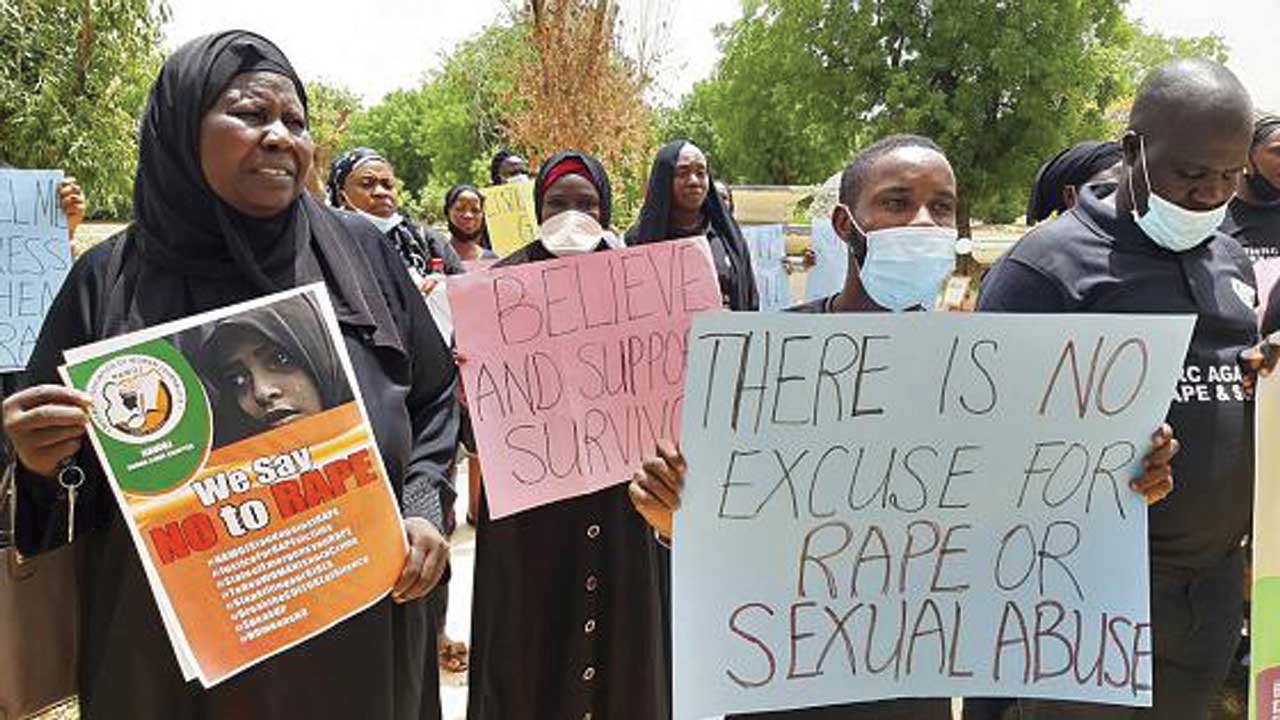
The case of Cwecwe, a seven-year-old girl from South Africa, has ignited nationwide protests and public outrage. The incident, initially reported to the police on October 16, 2024, involved allegations of sexual abuse. Despite a medical examination and a social worker’s assessment, prosecutors declined to pursue the case a month later, citing insufficient evidence. This decision, coupled with the lack of progress in the investigation, led Cwecwe’s mother to speak out publicly, bringing widespread attention to the case and highlighting systemic issues within the country’s handling of sexual assault cases.
South Africa’s Police Minister, Senzo Mchunu, addressed the public’s concerns by assuring that a thorough investigation is now underway. He acknowledged the complexities of the case, noting that it had been managed by three different investigating officers, which resulted in a case file that “could have been better prepared.” One of the significant challenges mentioned was the absence of DNA evidence of the suspected perpetrator, which complicates the investigation.
The public’s frustration is further fueled by South Africa’s alarming rates of sexual violence, particularly against children, where rape is reported as the most common crime. The perceived mishandling of Cwecwe’s case has become emblematic of broader systemic failures in addressing sexual assault. Protests erupted across the nation, with citizens demanding justice for Cwecwe and calling for reforms in how such cases are investigated and prosecuted.
The case continues to be a focal point in South Africa’s ongoing struggle against sexual violence, highlighting the critical need for systemic change and accountability.
Systemic Neglect
Why have the very institutions and systems entrusted with upholding justice consistently failed to expose and address systemic patterns of assault? It is imperative that educational and professional establishments adopt stringent, enforceable policies to combat all forms of assault—not merely physical violence, but also psychological coercion, emotional manipulation, and blackmail. Yet, one must ask: Are workplaces genuinely prioritizing these issues, or are they perpetuating cultures of silence and impunity?
Reporting assault remains fraught with risk, as institutions often prioritize reputation over accountability. Survivors frequently encounter victim-blaming rhetoric—authorities advising them to “avoid dark areas,” “refrain from drinking,” or “dress modestly”—shifting responsibility away from perpetrators and onto victims. Worse still, legal systems routinely dismiss cases, leaving survivors without recourse and reinforcing a cycle of neglect.
In Africa, these systemic failures are starkly evident. For instance, UNICEF’s recent report reveals that over 79 million girls and women in sub-Saharan Africa—more than 1 in 5—have experienced rape or sexual assault during childhood, making it the region with the highest number of victims globally. These figures are part of the first-ever global estimates on childhood sexual violence, which indicate that 370 million girls and women worldwide have faced such abuse before turning 18. When including non-contact forms like online or verbal harassment, the global number rises to 650 million, or 1 in 5 girls and women .

To dismantle this status quo, we must demand transparent reporting mechanisms, survivor-centered policies, and mandatory anti-coercion training across all sectors. Only then can we shift from rhetoric to meaningful protection—and from complicity to jusice.
Victims of sexual assault are often actively discouraged from coming forward, and as a result, a vast number of cases go unreported. The statistics available barely scratch the surface, as many survivors remain silent out of fear, shame, or mistrust in the system. Rape culture—deeply embedded in societal norms and institutions—protects perpetrators, silences victims, normalizes impunity, and shifts the burden of prevention onto those most at risk. As emphasized in Rebecca’s TEDx Talk, a victim herself, it demands that victims—especially women—constantly have to alter their behavior and make unreasonable sacrifices to avoid assault. This culture is both pervasive and insidious, infiltrating every part of daily life. The notion that rape is triggered by revealing clothing is not only false, but harmful. Sexual violence predates modern fashion, and survivors include individuals dressed modestly, even children in school uniforms. The problem is not clothing—it’s a society that excuses predators and punishes survivors.
This culture of silence also raises a critical question: are there any real consequences for authorities who knowingly fail to report abuse? Shouldn’t reporting be mandatory—especially for those in positions of power and trust? When society urges victims to protect family honor instead of seeking justice, it sends a harmful message: that preserving appearances matters more than healing and accountability. This pressure, often placed on children, implies that it is their duty to protect the family’s image, even at the cost of their own safety and truth.
But the system should work for survivors—not against them. Every child and every victim deserves to feel safe, heard, and supported. They should be confident that institutions will believe them, stand with them, and take action. When institutions fail to do this, the consequences are grave—manifesting in deep psychological trauma, long-term PTSD, and poor mental health. These are not side effects—they are the silent epidemics we are only beginning to confront.
Globally, the gravity of sexual violence is reflected in the legal systems of several nations, where rape is punishable by death under certain circumstances. Countries such as China, Afghanistan, the United Arab Emirates, Egypt, Iran, Saudi Arabia, Pakistan, and North Korea impose the death penalty for rape, particularly in aggravated cases.
Yet, in many jurisdictions, inconsistencies in sentencing and the persistence of lenient penalties weaken the justice system’s ability to both punish and deter. Survivors deserve more than token recognition of their pain—they deserve a system that acknowledges the lifelong toll of sexual violence. Heightened penalties, especially in cases involving minors, repeat offenders, or acts of extreme brutality, are not just about punishment—they are a reflection of a society’s unwavering commitment to justice, protection, and human rights. This is because rape is not only a brutal assault on an individual; it is a fundamental violation of bodily autonomy and human dignity. By doing so, victims may be encouraged to come forward and ensure perpetrators are held fully accountable. Additionally, harsher penalties can be part of a broader effort to challenge harmful cultural attitudes that normalize or trivialize sexual violence.
Role of parents and educators in guardianship
In today’s world, where young people are exposed to a flood of information—often unfiltered and misleading—parents and educators have an urgent responsibility to act as intentional guardians of sexual health and well-being. Yet in many African societies, the topic of sexual health education remains taboo, avoided in households and treated as a subject too uncomfortable to approach. This silence does more harm than good. Children grow up uninformed, confused, and vulnerable—often learning from inaccurate sources or through traumatic experiences.
According to Slum and Rural Health Initiative, Sexual health education should not be feared; it should be embraced as a tool for empowerment. When taught in an age-appropriate and sensitive manner, it equips children with the knowledge they need to understand their bodies, set boundaries, respect others, and make informed choices. Parents, in particular, are uniquely positioned to shape this foundation from an early age. Through everyday conversations and the values they model, children begin to understand consent, personal safety, and the dignity of human relationships.
Unfortunately, many parents still struggle to initiate these conversations due to cultural norms, personal discomfort, or lack of proper knowledge. But when parents choose to be open, honest, and approachable, they cultivate trust and encourage their children to ask questions without fear or shame. Studies consistently show that children who engage in open discussions about sexual health with their parents are more likely to make healthy decisions, delay risky behaviors, and develop self-respect.
Moreover, comprehensive sexual health education at home plays a powerful protective role. It arms children against the threats of sexual abuse, early pregnancy, peer pressure, and sexually transmitted infections. Parents who partner with educators and healthcare providers create a consistent, value-based support system that guides young people through each stage of development with confidence and clarity.

Ignoring cycles and patterns; societal role
According to Domestic Shelters, sexual coercion in intimate relationships is a covert yet profoundly damaging form of abuse. Unlike physical violence, it relies on psychological and emotional tactics to pressure a partner into unwanted sexual activity. These behaviors—though nonviolent—are often part of a larger cycle of control that strips individuals of their autonomy, consent, and sense of self.
Coercive partners may use guilt, emotional blackmail, silent treatment, or manipulation of vulnerabilities to compel compliance. Over time, these patterns blur the lines between desire and duty, making victims feel as though they must submit to preserve the relationship or avoid conflict. This erosion of agency is not just harmful—it’s abusive.
What makes this issue more insidious is society’s frequent silence. By failing to recognize and call out these patterns, communities often normalize coercion under the guise of “relationship dynamics” or “marital obligation.” In doing so, we ignore the cycles that perpetuate harm and silence those affected.
Victim to victimizer
Groundbreaking research published in The British Journal of Psychiatry delves into the troubling and complex connection between childhood sexual abuse and the potential for later perpetration. The study reveals that a subset of male perpetrators reported having been sexually abused in childhood, suggesting that for some, early victimization may contribute to a cycle in which victims become victimizers. Notably, this pattern was not observed among female victims, highlighting the potential influence of gender in how trauma manifests and is processed.
These findings underscore the deep psychological scars that childhood abuse can leave behind—and how, in some cases, unaddressed trauma may evolve into harmful behaviors. However, it’s important to emphasize that most survivors of childhood sexual abuse do not go on to become abusers. The path from victim to perpetrator is neither simple nor inevitable. Factors such as the severity and context of the abuse, the identity of the abuser, emotional support systems, and the survivor’s coping mechanisms all shape individual outcomes.
This nuanced understanding holds critical implications for both prevention and intervention. Supporting male survivors early—through trauma-informed counseling, mental health care, and community outreach—can play a crucial role in breaking this destructive cycle. A proactive approach that centers healing rather than silence helps survivors reclaim their agency and prevents the potential ripple effect of unhealed trauma.
Moreover, public awareness and education are essential to dismantling the myths that perpetuate stigma, particularly the notion that abuse always leads to abuse. Encouraging open dialogue, challenging toxic masculinity, and creating safe spaces for disclosure can transform how society responds to male survivors—many of whom suffer in silence due to shame or fear of disbelief.
If we are to stop the cycle of abuse, we must understand it not as a fate sealed by victimhood, but as a preventable pattern—one that can be disrupted through compassion, support, and early intervention.
Teens
Continuing the conversation on the long-term impact of sexual abuse, a study published by NIHR Evidence sheds critical light on how sexual assault profoundly affects the mental health and academic lives of adolescents. Within just six weeks of the trauma, the majority of teenage survivors displayed symptoms consistent with post-traumatic stress disorder (PTSD), depression, or anxiety. While some improvement was observed over time, the burden proved persistent—over half of the participants continued to battle at least one mental health disorder even a year later.
This psychological toll did not exist in isolation. The study further revealed a marked decline in school attendance, with rates of absenteeism doubling one year after the assault compared to the period shortly before. These missed school days—often a consequence of emotional distress, disrupted sleep, and difficulty concentrating—directly contributed to academic underperformance. In turn, this academic decline worsened anxiety and sleep issues, creating a distressing feedback loop that is difficult to escape without targeted support.
These findings underscore a crucial point: schools are not just centers for learning—they are frontline spaces for trauma response. Adolescents, already navigating the complexities of identity, peer relationships, and emotional development, are especially vulnerable to the destabilizing effects of sexual violence. Without timely and informed intervention, the ripple effects can compromise not only academic potential but also long-term mental wellness and life outcomes.
To address this, the study calls for enhanced support, training, and resources for educational institutions. Teachers, counselors, and school administrators must be equipped with the knowledge and tools to recognize trauma, respond with sensitivity, and coordinate appropriate mental health interventions. A trauma-informed school environment—rooted in empathy, confidentiality, and consistency—can make the difference between recovery and long-term harm.
Investing in school-based support systems isn’t optional—it’s essential. By recognizing the classroom as a space for healing as much as for education, we can begin to dismantle the compounded harm that sexual violence inflicts on young lives.
Men
While sexual assault is frequently framed as an issue predominantly affecting women, this narrative often eclipses the lived realities of male survivors. Men, too, are victims—yet their experiences are routinely silenced by deeply ingrained cultural myths and gender stereotypes that equate masculinity with dominance, invulnerability, and sexual readiness. These harmful beliefs make it profoundly difficult for male survivors to identify their experiences as abuse, let alone seek help.
Unlike the societal scripts that validate female pain, male trauma is often dismissed, questioned, or ignored. Survivors may struggle with intense emotional turmoil—rage, shame, guilt, confusion, and fear—compounded by the pressure to “man up” and remain stoic. The result is isolation and silence. Many men avoid seeking medical care or counseling out of fear that they will be perceived as weak, mocked by peers, or have their masculinity questioned.
These misconceptions create an added layer of invisibility for male survivors, reinforcing stigma and delaying healing. But support exists—and it is vital that male survivors know they are entitled to the same level of care, dignity, and justice as any other victim. Mental health services, legal advocacy, survivor networks, and trauma-informed care must be expanded and openly extended to men.
Sexual violence is a pervasive issue that demands collective accountability, not silence. It affects individuals of all genders and ages, leaving deep emotional, psychological, and social wounds. To break the cycle, we must confront harmful myths, support survivors without bias, and ensure systems of justice and care are inclusive, informed, and responsive. True change begins when every survivor is believed, protected, and empowered to heal.
Leave a Reply