

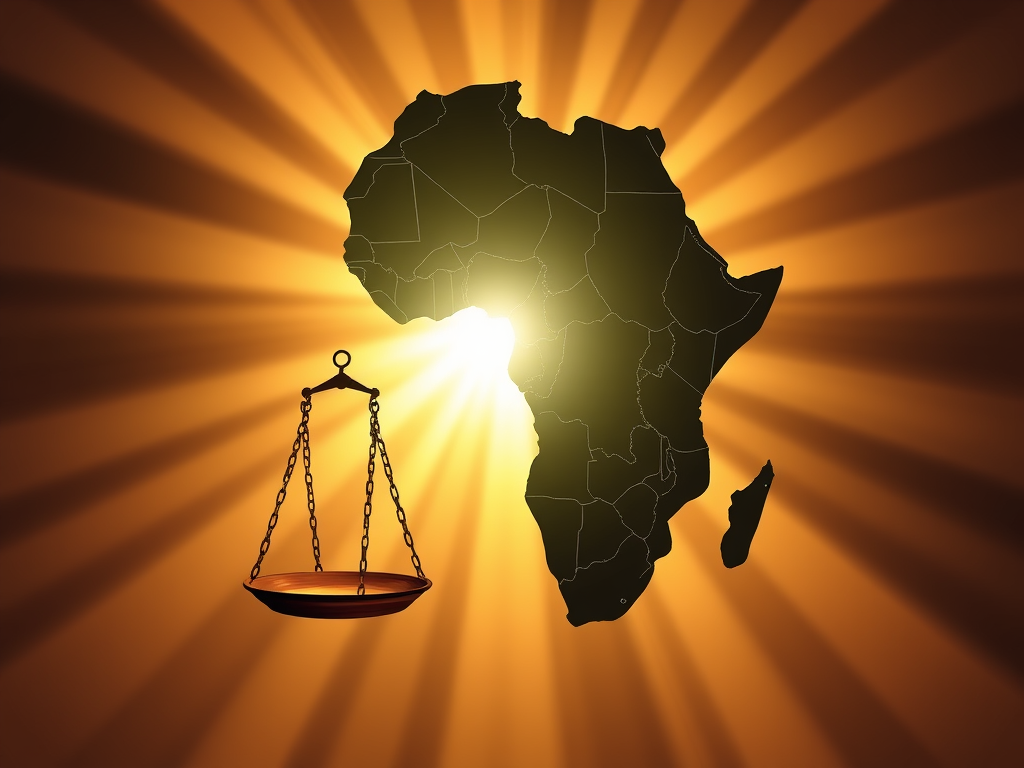
International law, being a system of cooperation and tool of governance, has been central to shaping the destiny of nations and states ever since the establishment of the modern international system. The history, politics, and socio-economy of Africa within the system, however, witness basic imbalances and disparities that continue to appear in the contemporary international legal relations. Africa’s engagement with international law has been largely a one of subjection and not authorship. While African nations are now reputable members of the international community, the very format of international law was hammered out in the days of colonial supremacy, racial inferiority, and economic exploitation, with lingering legacies that still hinder Africa’s quest for justice, sovereignty, and equitable development.
Historically, the colonization of Africa was legitimized and facilitated by legal doctrines and practices grounded in European-centric international law. The Berlin Conference of 1884-85, convened without African representation, is the paradigmatic instance of the systematic exclusion of African agency. The legal fiction of terra nullius was employed to justify the appropriation of African land, asserting that lands without “civilized” rule were empty and thus available for appropriation. This idea, accompanied by the dogma of effective occupation, permitted colonial powers to partition the continent and enthrone exploitation. The legacy of these dogmas persists in man-made borders, economic dependencies, and chronic instability.
With the advent of decolonization following World War II, African nations had become independent nations within the United Nations system. The UN Charter (1945), particularly Articles 1 and 55, emphasized self-determination and equal rights of peoples, creating a normative and legal basis for decolonizing empire arrangements. The Declaration on the Granting of Independence to Colonial Countries and Peoples (UNGA Res. 1514, 1960) was a milestone, affirming colonialism as illegitimate and solidifying the right of self-determination. Decolonization was not, however, succeeded by a radical reorganization of the international legal order. These global governance institutions—from the UN Security Council to the World Bank and the International Monetary Fund (IMF)—remained reflective of post-war hierarchies of power led by the old colonial powers.

Africa’s post-colonial experience within this legal context has been marked by ongoing asymmetries. International economic law, including trade agreements and investment treaties, has a tendency to undermine the policy space of African states. The WTO legal context, while offering institutions for dispute settlement and trade liberalization, favors disproportionately countries with robust legal infrastructure and economic influence. EPA-type agreements such as the Economic Partnership Agreements between the European Union and the African, Caribbean and Pacific (ACP) countries have been criticized as neo-colonial in economic terms for tying the hands of African governments from protecting nascent industries and pursuing development-focused trade policy.
Furthermore, international human rights and humanitarian law has been a two-way street. Although such documents as the African Charter on Human and Peoples’ Rights (1981) are an impressive demonstration of continental agency, enforcement tools internationally have been double-edged. The International Criminal Court (ICC), for instance, has been criticized for targeting disproportionately African leaders, fueling fears of selective justice. While accountability for heinous crimes is paramount, silence or inaction by the international community when the same atrocities occur in powerful states taints the principle of universal justice.
Environmental law constitutes yet another perspective under which one should view international law’s duty to Africa. The continent, most disproportionately so by climate change, has made the least significant contribution to carbon emissions globally. Devices like the Paris Agreement of 2015 acknowledge “common but differentiated responsibilities,” yet global Northern funding vows continue to remain lacking. More recent COP meetings, like COP27 in Egypt, have underscored Africa’s cry for climate justice in the forms of loss and damage compensation as well as the transfer of technology. These are not done gratuitously but rather as commitments within the legal mandates of equity, historical responsibility, and intergenerational justice.
In the world of intellectual property, the TRIPS Agreement and its like have introduced massive barriers to access to medicine in Africa that is necessary. The late 1990s and early 2000s HIV/AIDS pandemic proved the devastating consequences of rigid IP regimes. Although the Doha Declaration on the TRIPS Agreement and Public Health (2001) allowed some flexibilities, their implementation has often been delayed by political and economic pressure by pharmaceutical giants and their host governments. The COVID-19 crisis reignited the question, and Africa called for patent waivers to allow local production of vaccines—something resisted by the majority of developed countries.
Geopolitically, African voices remain underrepresented in global institutions. The UN Security Council, for example, has no permanent African member despite the continent comprising over a quarter of the General Assembly. This exclusion is symptomatic of underlying structural inequalities that undermine Africa’s voice in global governance. International institutional reform is therefore not just an issue of procedural justice but of substantive fairness and legitimacy.
But Africa is also not a passive recipient of international law. Africa has increasingly asserted its normative agency, creating legal instruments that are attuned to its realities and aspirations. The Constitutive Act of the African Union, the Malabo Protocol on the African Court of Justice and Human Rights, and the African Continental Free Trade Area (AfCFTA) are testament to a growing commitment to regional integration, accountability, and economic empowerment. They challenge the one-size-fits-all nature of global legal norms and demand context-specific solutions.
To truly meet its obligations to Africa, international law must undergo a paradigmatic shift—from a system that has traditionally legitimized domination to one that enables emancipation and sustainable development on equal terms. This entails the decolonization of legal practice and education, ensuring equal representation in international institutions, and consistent and principled application of legal principles. It also requires the Global North to acknowledge and redress historical injustices through reparative measures, debt cancellation, and meeting climate finance commitments.
In conclusion, international law owes Africa not mere rhetorical guarantees but a redesign of its structures, priorities, and practices. Africa’s destiny must be shaped not by inherited legal legacies of domination but by a reimagined international legal order founded on justice, solidarity, and mutual respect. Only then can the promise of international law as a tool of peace, equality, and development be meaningfully realized for all.
Leave a Reply