

Of the six continents, Africa ranks last in terms of economic performance — a staggering reality when placed alongside another striking fact: Africa is the youngest continent in the world, with nearly 70% of its population under the age of 30. One would expect such a youthful demographic to drive rapid economic growth, as has been the case in many emerging economies. Yet, in Africa’s case, the paradox remains — a young population existing alongside economic stagnation. How can this contradiction persist?
The answer lies beneath the surface, at the very foundation: education. Not merely access to education, but the quality, delivery, and relevance of what we teach our youth.
And this brings us to why we are here today. China! (cue Trump voice). With the second-fastest growing economy in the world — second only to India — China stands as a living example of how deliberate, targeted educational reforms can transform a once-poor, agrarian society into an economic superpower. Today, China’s economy is valued at over $19 trillion, second only to the United States. And at the heart of this transformation lies one crucial pillar: a robust, strategic education system.
How China Offers Education
China’s education system stands out as one of the most structured, strategic, and results-driven models in the world. With each stage intricately linked to national development goals, it serves as both a ladder for individual advancement and a blueprint for national prosperity.
At the heart of China’s system is basic education — nine years of compulsory, state-funded schooling. Education isn’t just a right in China; it’s a national priority. Kindergarten is available but optional, and it focuses more on basic life skills than rigorous academics — keeping things age-appropriate.
The formal journey begins with six years of primary school, followed by three years of junior secondary. After this phase, students sit for an entrance exam that determines their path forward — either academic senior secondary school or the vocational route. The academic path eventually leads to the Gaokao, China’s highly competitive university entrance exam, while the vocational track offers two to four years of hands-on, skills-based training that directly feeds into the country’s industrial and economic sectors.
Higher education also has two streams — universities, which offer four- to five-year degree programs, and colleges, which offer three-year diploma or certificate programs in both academic and technical fields. Postgraduate and doctoral studies are reserved for universities.
And importantly, learning doesn’t end with the youth. China has a well-structured adult education system, especially in rural and underserved areas, aimed at raising literacy levels and strengthening workforce skills across all age groups.
One of the hallmarks of China’s education system is its centralized, purpose-driven curriculum. Education is not left to chance; it is a deliberate tool to foster patriotism, reinforce national unity, and support industrialization. STEM education, in particular, receives significant investment — a testament to China’s understanding that global progress is increasingly driven by science and technology. By 2017, China had surpassed the United States in the number of scientific publications and now leads globally in elite academic contests such as the International Olympiads in Mathematics, Physics, Chemistry, and Informatics — an affirmation of the system’s strength.
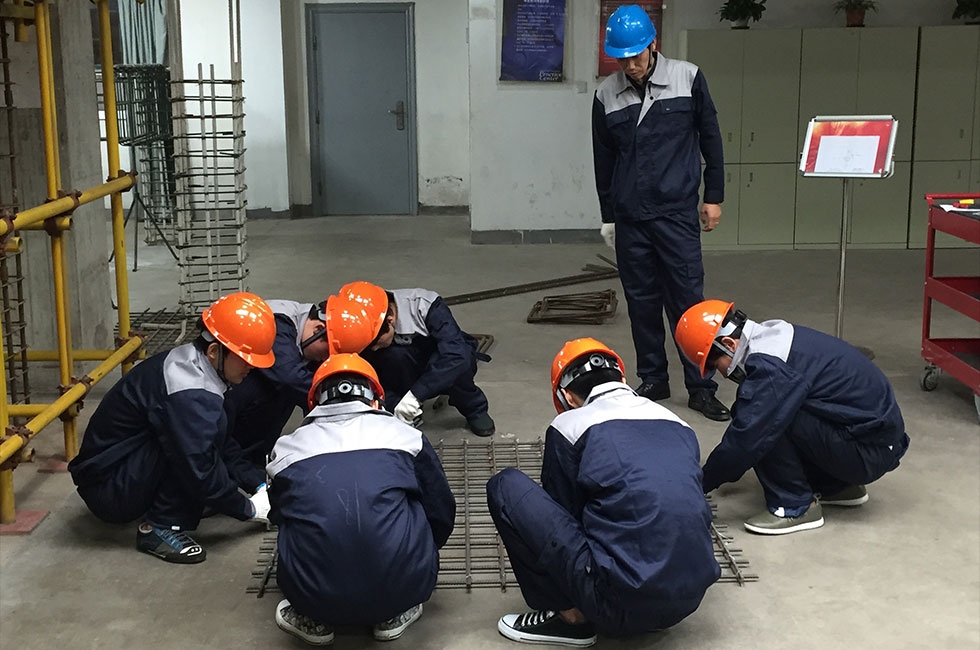
Another critical pillar is China’s integration of large-scale vocational training into mainstream education. This approach equips students not only with academic knowledge but also practical skills — a dual competency that fuels the nation’s rapid industrial and technological advancement.
And as every strong education system requires great educators, China has invested in rigorous teacher preparation, coupled with performance-based incentives. Teachers are held in high esteem, with September 10th officially celebrated as Teachers’ Day — a national holiday honoring their contribution, and a clear indication of the value placed on their role in shaping the nation’s future.
Above all, China’s education culture is one of discipline, ambition, and excellence, reinforced through rigorous assessments and high expectations. Every layer of the system is built to channel human potential into national progress — a model worth studying for any nation looking to rise.
The Gaps in African Education Systems
Funds, funds, funds… it always stems back to being both the problem and the solution to everything. The education systems of many African countries are severely underfunded. For example, a conversation I had just a month ago with a lady taking her child through what is supposed to be a free school — Universal Primary Education in Uganda — she was being charged school fees, even after being assured it was completely free. So really, as African countries, how much are we allocating to education in our national financial year budgets? Are there “bigger” priorities that are somehow receiving more than they should?

Take Uganda, for instance. According to UNICEF, the country allocated just 2.2% of its GDP to education in the 2023/2024 financial year — far below the 5% recommended under the Incheon Declaration. And yet, our golden example for today, China, is spending 4%. However, this year, Uganda’s finance minister announced an allocation of 6.9% during the national budget reading. Quite the leap.
Furthermore, it goes without saying that we all want to expand our job markets and open up diverse opportunities for employment. But someone needs to explain why we were learning about the Canadian Prairies in secondary school. I understand the aim may have been to explore how global agricultural economies function — but wouldn’t it have made more practical sense to study successful African models instead? For example, Nigeria boasts the largest agricultural sector in Africa, contributing about 24% to its GDP, while Rwanda is rapidly establishing itself as a regional hub for digital innovation. These are relevant, real-world case studies that could inspire solutions tailored to our own context.
So why are we still recycling a curriculum handed down to us during colonial rule? It’s been decades. And yet we’re still being taught through frameworks that often ignore our local realities.
And speaking of colonial leftovers — why are we still learning almost exclusively in a foreign language we’ve been taught to see as intellectually superior? In many schools, fluency in English is treated as a measure of intelligence and potential. And sure, global communication is important — but why not also equip learners with regional languages like Kiswahili, especially within East Africa? That would open up cross-border opportunities that are both realistic and accessible.
Take India, for example — now the fastest-growing economy in the world. Much of its education system is delivered in native languages, with English treated as an additional subject. You’ve probably seen it online — programming or business tutorials conducted entirely in Hindi, with massive followings.
Anyway, I may have digressed a little — but the bottom line is this: our education systems are out of sync with labor market demands. Canadian Prairies? Wheat in Alberta? That content might’ve been rich in topsoil, but it didn’t exactly prepare us to cultivate progress at home. (Pardon my punning)
Another issue we need to talk about is how vocational schools are subtly undermined. They’re treated like a fallback — as if students who go there aren’t “smart enough” for intense STEM or Arts. And this takes us right back to the same narrative that keeps us stuck in a cycle of job seekers, not job creators. Some of the wealthiest people in the world began by using hand skills to start small businesses — ones that eventually became multi-million dollar companies, employing entire communities.
And I would like to believe that this is exactly why several African countries remain importing countries, rather than exporting ones — aside from raw materials like agricultural produce and minerals (which we are incredibly rich in). These are resources we could process ourselves and turn into finished products for direct use by our citizens. Instead, we send them off, let other countries manufacture them, and then buy the finished goods back — at higher prices. It’s a very expensive loop of missed opportunity.
So, let’s look seriously at vocational and technical schools. Let’s encourage them, fund them, and give them the tools they need to unlock the potential of our youth. And to the parents — let’s stop limiting our children’s dreams to becoming only “doctors,” “engineers,” “lawyers,” or “accountants.” When we box them into careers they never truly desired, they graduate only to face the unsettling truth: not only is this path unfulfilling, but they also lack the practical skills to pivot into something else they could be passionate about.
We need to show children that these schools are just as valuable. Many offer programs in construction, manufacturing (!!), trucking, auto servicing, hair styling, cosmetology, mechanical engineering, automotive mechanics, electrical installation, plumbing and pipe fitting, welding, and fabrication. These take students away from theory-based learning and introduce them to the practical skills the economy desperately needs. Imagine if we invested in technical schools to process and manufacture these resources locally. The jobs, the innovation, the wealth — all would remain within our borders.
Sadly, this kind of hands-on training is often brushed off as “informal education” — a label that subtly undermines its importance. Meanwhile, the so-called “formal” education system, introduced by colonial governments, is still treated as the ideal. It really makes you think.
Another major challenge Africa faces is brain drain — the emigration of highly trained and qualified individuals from their home countries. Africa invests in educating its people, yet many leave for better opportunities abroad. This movement is driven by well-justified push and pull factors: limited job availability, political instability, higher wages overseas, improved social services, and more. Naturally, this exodus slows down economic development by draining the continent of its skilled workforce. However, the solution ultimately lies within Africa’s own hands. But that, I suppose, is a topic for another day.

Challenges to Consider
While adopting elements of China’s education system holds promise, it also comes with significant challenges. First, the success of such a system relies heavily on strong political will, long-term planning, and efficient governance — areas where many African nations still face hurdles. Implementing centralized reforms requires not just policy, but also reliable infrastructure, consistent funding, and proper monitoring systems — all of which are unevenly distributed across the continent.
Additionally, China’s exam-driven culture, though effective in producing disciplined students, has been criticized for putting students under intense pressure and sometimes stifling creativity. This is a risk that must be carefully managed in any African adaptation.
Cultural differences are another key factor. Reforms must be context-sensitive, respecting local values, languages, and social dynamics. What works in one country may not work the same way in another.
And finally, education reform is not a quick fix. It takes years of investment before any measurable economic returns can be seen. Without patience, commitment, and community buy-in, even the best-designed reforms may fail to take root.
Conclusion
So then — could adopting China’s education system help Africa fix its economy? Possibly. But the deeper issue is not just about copying a system that works elsewhere. It’s about waking up to the fact that our own system is not working for us.
Education is not just about passing exams or bagging degrees — it’s about building a skilled, empowered, and relevant workforce that fits our continent’s realities. If China teaches us anything, it’s that targeted reform, heavy investment in technical skills, valuing teachers, and aligning education with national development goals can transform a country — even one that started off with very little.
But we cannot borrow blindly. We must tailor reforms to suit our people, our languages, our cultures, and our economic needs. We must respect informal learning just as much as we respect degrees. We must stop glorifying the “white-collar path” and instead start equipping our youth to create jobs, not just apply for them.
Africa has the youngest population in the world. That’s not a crisis — that’s our competitive edge. But only if we fix the foundation — and that foundation is education. Not just any education, but one that makes sense for Africa.
The time to rethink is now.

Leave a Reply to Odiiri EmmanuelCancel reply