

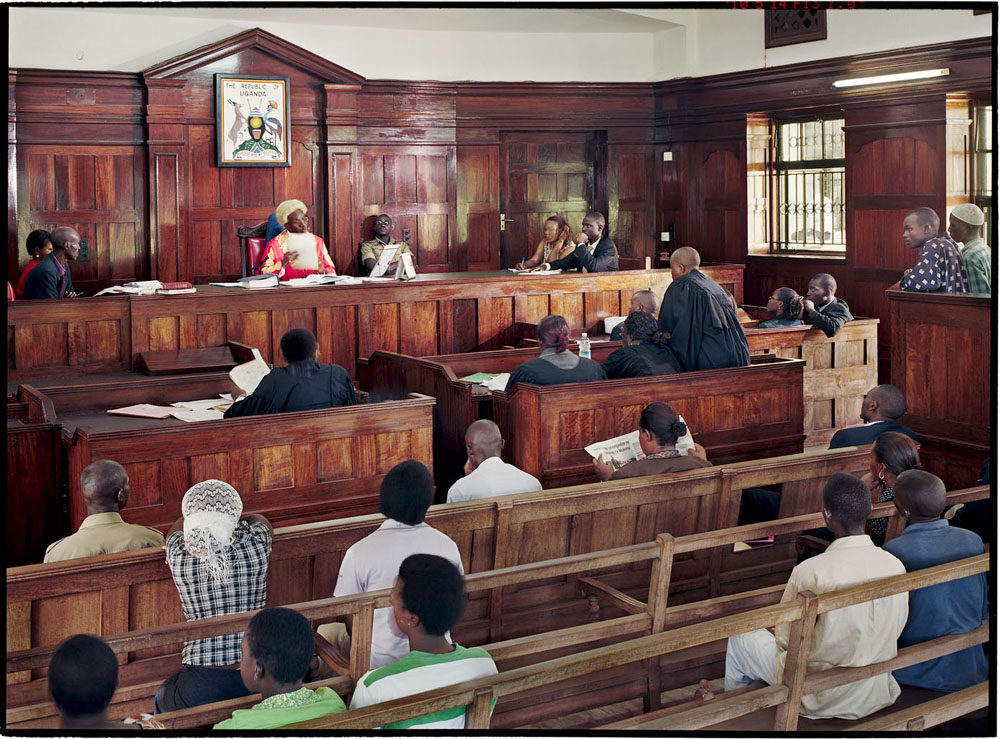
In Uganda’s complex political saga, the courts are generally regarded as the impartial umpire, the final court of appeal in an executive-dominated system. But what lies behind the appearance of impartiality is a different, more malign reality: the courts too have joined the political machinery. This is not to say that all judges are compromised or that justice is an illusion, but in the Ugandan context, where politics is ubiquitous, it just is not feasible to separate law and power.
One must begin with the structural tilt inherent in the system to see how courts politicize. Uganda’s Constitution affirms an independent judiciary, but the very nature of power places judges in the crosshairs of political interference. The President appoints to the bench, particularly the superior courts, from among those whose careers have been inextricably linked with the political class. Although this is not exceptional in Uganda, the distinction is in the extent to which loyalty and survival drives can inform politically charged decisions. The legal codes might talk of separation of powers, but in practice, the shadow of the executive lies long over the judiciary.
We have seen it time and again: election petitions that begin in popular euphoria, only to end in judgments that, while shrouded in legal reasoning, read as political statements. The constitutional court, in theory, is the guardian of the rule of law, but in practice, it runs the risk of becoming the keeper of political stability i.e., maintaining the status quo. Laws that enshrine political dominance, such as those altering presidential age or altering electoral structures, have survived judicial challenge on reasoning that sidesteps the wider democratic concerns. It is a legal minimalism practice that claims to be apolitical but maintains the political quo.
The judiciary are not merely reactive reactors to politically salient cases; they are also instruments employed to contain dissent. Public order charges, Computer Misuse Act charges, and other charges are often confirmed in a manner that validates political restrictions on political speech. At those times, the judiciary is exercising a silent but crucial function in diminished civic space where law’s process is clad in political tool’s language. The courtroom has become a venue where the language of law conceals the machinery of power. The irony is biting: the institution itself that is supposed to act as a brake on excess becomes an agent of it.
But this is not strictly a tale of judicial capture it is one of survival in a system where politics is the oxygen. Judges have to work in an environment in which questioning the executive too pointedly can invite personal and professional risk. The line between judicial pragmatism and judicial independence disappears, especially when the cost of disobedience is exile or leaving the bench. In this environment, judges choose the path of cautious accommodation, penning narrow rulings that avoid conflict while preserving an air of legality. Others confront the political wind more directly, framing their rulings in language favorable to the existing order.
Still, there are instances of judicial courage. There are rulings that stand up to political pressure, decisions whereby courts have struck down laws or government actions curtailing constitutional rights. The most recent example of this move could be the Supreme court’s ruling on the unconstitutionality of civilians being tried under general court martials in Uganda. But these are exception rather than rule isolated flashes of independence that momentarily shatter public expectation before the machinery of political-legal compromise moves along its course.
When the courts politicize in Uganda, it is rarely in explicit statements of partisanship. It is in the steady entrenchment of judicial logic that prioritizes stability over accountability, procedure over substance. What is seen is a judiciary that has the veneer of a legal institution but subtly reinforces the political status quo. The danger is not merely in the decisions themselves, but in the way that they habituate the public: citizens begin to see the courts as not defenders of rights, but political result judges, to be anticipated in their reluctance to impede power.
The political fate of Uganda will not be determined in the ballot box only. It will also be determined in courtrooms, where law is read, understood, and occasionally twisted to fit the contours of political expediency. Until the judiciary is able to completely rid itself of the snares of political pressure, the promise of justice remains hypothetical a waltz between law and power where the latter generally gets to dictate the final tune.
Leave a Reply