

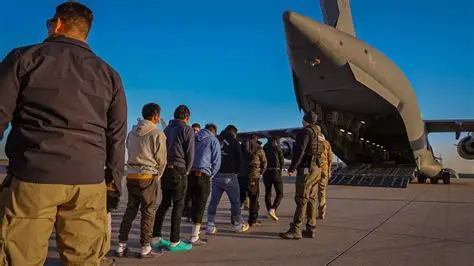
The news of the latest deportation deal between Uganda and the United States raised some eyebrows for a very good reason. On the surface, it seems like just another case of international cooperation: Washington has a case load to clear out, wishes to offload citizens whose status is in question or open to dispute, while Kampala opens its doors in exchange for diplomatic favor and likely financial payback. But beneath this transactional façade is a disquieting matrix of questions about sovereignty, the human dignity of people, and the commodification of Uganda’s identity as Africa’s “refugee-friendly” nation.
Uganda, let us remember, already hosts over 1.5 million refugees the most on the continent, largely South Sudanese and Democratic Republic of Congo. This generosity is regularly boasted of in international circles, with Kampala hailed as a darling of liberal refugee policy. But what is the paradox? The same country that cannot fully accommodate the millions already admitted to it is now acting to be a convenient dumping site for those shunned by the United States. What does this say? That Uganda’s global image as a host country is more about political negotiating leverage and less about ideals? Or that its territory and people’s resources can be rented out for a fee?
The deal also presents some fundamental ethical questions. Who exactly are the people being deported in this deal? Ugandans by nationality, or individuals with questionable claims which the U.S. simply wants to rid itself of? The ambiguity is chilling. In a world in which statelessness is itself a humanitarian disaster, gestures like this compromise the promise to create more people who don’t belong anywhere. What safeguards are there against Kampala welcoming those individuals who have no actual nexus to Uganda, except as recipients of Washington’s bureaucratic convenience? And if not, then what exactly happens to these deportees when they arrive? Do they end up as ghost citizens, quietly transferred into under-funded refugee camps, or are they to be forever second-class residents?
There is then the issue of power. No one should be surprised that relations between Uganda and America have always been transactional. From counterterrorism cooperation in Somalia to health funding under PEPFAR, Kampala has been a “strategic partner.” But this deportation pact is a low point: a wealthy superpower outsourcing its immigration “problem” to a poorer nation already struggling with unemployment, service delivery failures, and abuses of human rights. Is Uganda actually exercising sovereignty here, or is it once more surrendering to the gravitational forces of American foreign policy, in which a reply to aid and respect is bargained for by compliance?
Others would urge that this pact could be advantageous financial benefit, additional leverage to negotiate in international settings, or even bargaining capital to buffer U.S. criticism of Uganda’s government. Is commodifying people’s displacement worth the cost, however? Where does hospitality tip over into exploitation of Uganda’s reputation, its governance, and finally of its people, who must endure the social and economic costs of decisions well beyond their control?
The political calculus is also questionable. To America, the deal is a willingness to treat migration as an exercise in logistics rather than humanitarianism, something to be outsourced. To Uganda, it risks reopening the threat of the state being more answerable to foreign sponsors than to Ugandans themselves. When Ugandan youth go out and demand employment, corruption, and brutality, they are told that there isn’t money to be had. But when Washington comes knocking with a politically expedient request, suddenly the state has space, infrastructure, and terminology to throw it open.
In the end, this deportation deal is not so much a bureaucratic compromise it’s a mirror of the fundamental imbalances of the international order. Wealthy states unload their problems onto poor ones, and poor states deploy human beings as bargaining chips for aid and legitimacy. The deal forces us to wonder whose interests are actually being served here? The deportees, whose agency is erased and who are shuffled around like cargo? The Ugandans, who will be the implicit charges? Or Washington’s and Kampala’s political class, who will shake hands and then quietly duck for cover?
Uganda’s heritage of hospitality cannot be commodified into tools for transactional politics. If it really cared about dignity and rights, the government would have to demand clarification: who are the deportees precisely, what legal protections they have, and how would their return be managed? Otherwise, the agreement will be just another demonstration of how power works globally—not in justice or joint responsibility, but in convenient arrangements whereby the weak are shuffled about as chess pieces and the players take credit for their game-fu.
Leave a Reply