

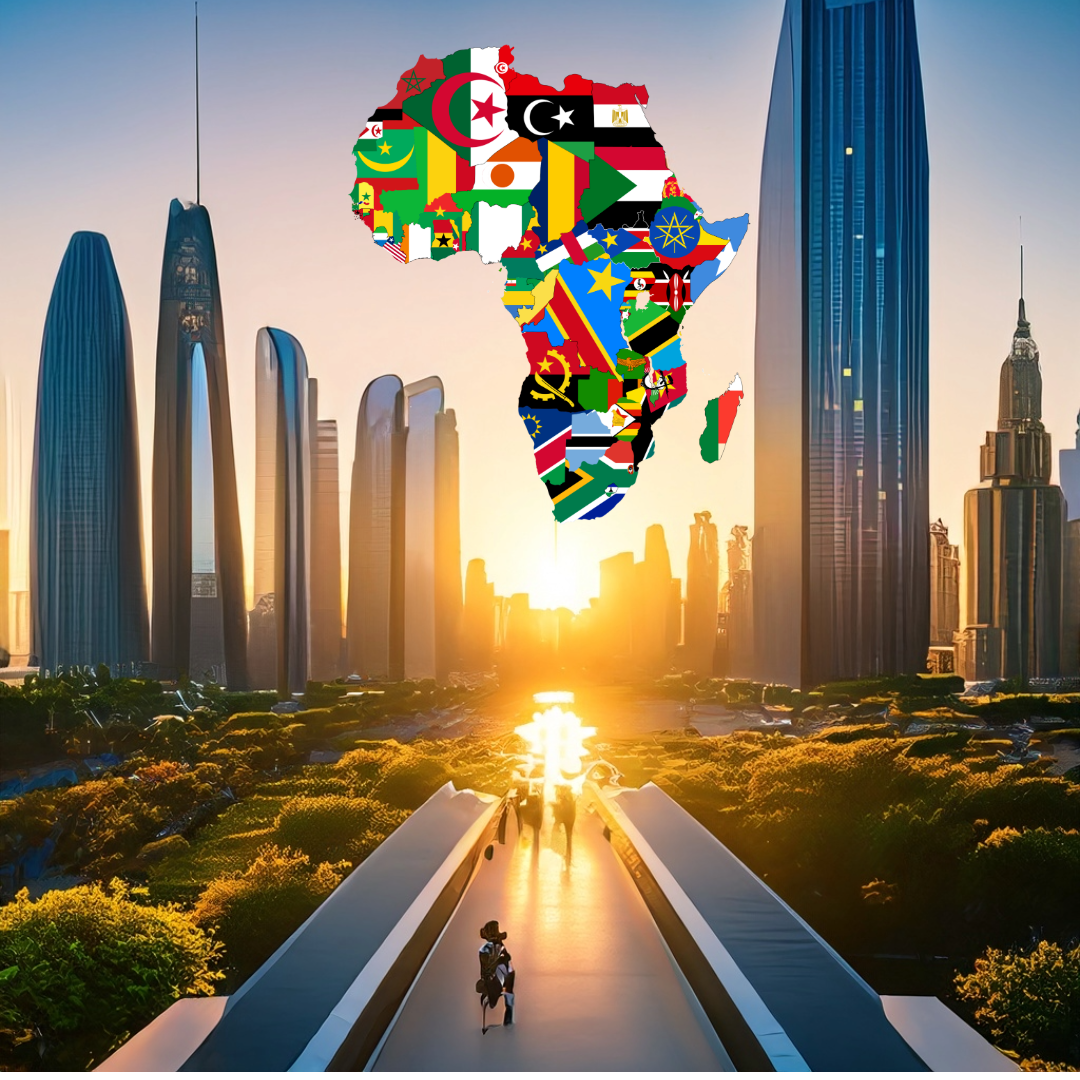
There’s a quiet but powerful question that rarely gets asked out loud. Who gets to imagine Africa’s future? Not who funds it. Not who writes reports about it. But who actually gets to decide what progress, development and success look like on this continent. Because if you listen closely, Africa’s future is being imagined constantly just not always by Africans living the consequences of those imaginations.
Governments imagine Africa as a series of infrastructure projects and five year plans. International institutions imagine it through charts, projections and phrases like “demographic dividend.” Tech companies imagine it as the “next frontier.” NGOs imagine it as a problem to be solved. Diaspora voices imagine it through nostalgia and distance. And young people on the ground? They’re often told to wait their turn.
The irony is that Africa is the youngest continent in the world. According to the World Bank, more than 60% of Africa’s population is under the age of 25 and this youth population is expected to grow significantly in the coming decades. Yet youth remain dramatically underrepresented in political leadership, economic decision making and long term planning spaces . We are the majority, but rarely the authors.
Instead, Africa’s future is frequently scripted in boardrooms far removed from everyday African life. Development agendas are often designed externally, then imported with timelines and metrics that prioritize donor satisfaction over lived reality. Scholars have long criticized this model, arguing that it reproduces dependency by positioning Africa as a site of intervention rather than imagination.
Even when Africans are included, the question becomes which Africans. Elites. English speaking. Urban. Credentialed. Often male. Often older. Often disconnected from the informal economies, rural communities and survival strategies that define life for millions. Vision becomes filtered through class.
This gap shows up clearly in politics. Afrobarometer surveys consistently reveal that young Africans feel excluded from decision making, even while being told they are “the future.” Many believe leaders prioritize their own interests over public good, which erodes trust and participation . When you’re not invited to imagine the future, you stop believing it’s meant for you.
There is also the international imagination of glossy reports predicting Africa’s rise, collapse or transformation depending on who’s funding the research. Africa becomes a projection screen. The future is framed as something that will happen to the continent, rather than something Africans are actively shaping. Even well meaning narratives about innovation and growth often center external validation in form of investment, rankings, foreign partnerships.
And yet, African institutions themselves acknowledge the need to reclaim this narrative. The African Union’s Agenda 2063 explicitly calls for African led development, cultural confidence, and ownership of the continent’s future vision, a recognition that imagination is a form of power, not just aspiration.
Still, documents don’t imagine futures, people do. Meanwhile, young Africans are imagining anyway. On social media. In art, fashion, music, startups, protests and private group chats. They imagine futures where borders are less restrictive, where work is dignified, where governance is accountable, where success doesn’t require leaving home. But these imaginations are often dismissed as unrealistic, disruptive or unserious until someone outside the continent repackages them as innovation.
There’s something deeply political about who is allowed to dream publicly. When imagination is centralized, possibility narrows. When imagination is democratized, futures multiply.
The danger of excluding ordinary Africans from future making isn’t just unfairness, it’s failure. Policies designed without lived insight don’t work. Cities planned without residents become unlivable. Economies imagined without workers collapse inward. A future imagined without its people is just fiction with funding.
Africa doesn’t lack vision. It lacks permission for farmers, informal workers, young women, migrants, creatives and everyday citizens to define what progress means for them. It lacks systems that take those imaginations seriously.
Because the future is not neutral. It always reflects the priorities of those who imagine it. And until more Africans are allowed not just to live in the present, but to author what comes next, Africa’s future will continue to feel strangely familiar. Ambitious on paper, distant in reality.
The real question isn’t whether Africa has a future.
It’s whether that future will finally be imagined by the people who have to live inside it.

Leave a Reply