

Language likes to pretend it’s neutral. Like, “I’m just vowels and consonants, don’t project onto me.” But in Africa, language has never been innocent. It has been a passcode, a border, a quiet sorting mechanism that decides who sounds intelligent, employable, or “civilized.” If you’ve ever watched a room change the moment someone switches from a local language to English or French, you already know this isn’t about communication but about power.
German, English, French, Portuguese became the languages of school, law, government and money, while African languages were politely pushed into the corner labeled culture. Songs, proverbs, funerals, very nice. Science, philosophy, governance, apparently too serious. This was strategy. Control the language and you shape how people think, what they aspire to and how they understand themselves.
Ngũgĩ wa Thiong’o is often cited here, especially for Decolonising the Mind, where he argues that colonial education didn’t just teach Africans new languages but trained them to distrust their own, to associate intelligence and progress with foreign tongues . That argument is powerful, influential and frankly hard to ignore. But here’s the uncomfortable pause we need to take because ideas don’t float in the air detached from the people who produce them.
Ngũgĩ’s legacy is complicated by serious allegations of domestic violence , made publicly by his son Mukoma wa Ngũgĩ and discussed widely in literary circles . So the question becomes awkward but necessary: if someone has caused harm in their personal life, should we still listen to their ideas? Do violent or abusive actions invalidate intellectual contributions?
There’s no neat answer and anyone who pretends there is lying. What we can do is refuse hero worship. We can engage with ideas critically without sanctifying their authors. Ngũgĩ doesn’t need to be a moral saint for his analysis of language and colonial power to resonate but he also doesn’t deserve protection from scrutiny. Holding both truths at once is not hypocrisy.
And honestly, this tension mirrors Africa’s language problem itself. Colonial languages still dominate because they feel “practical” and “neutral,” even though they’re rooted in violence and domination. We didn’t choose them freely we inherited them. Yet here we are, using them, bending them, surviving through them. That doesn’t mean we forget how they arrived.
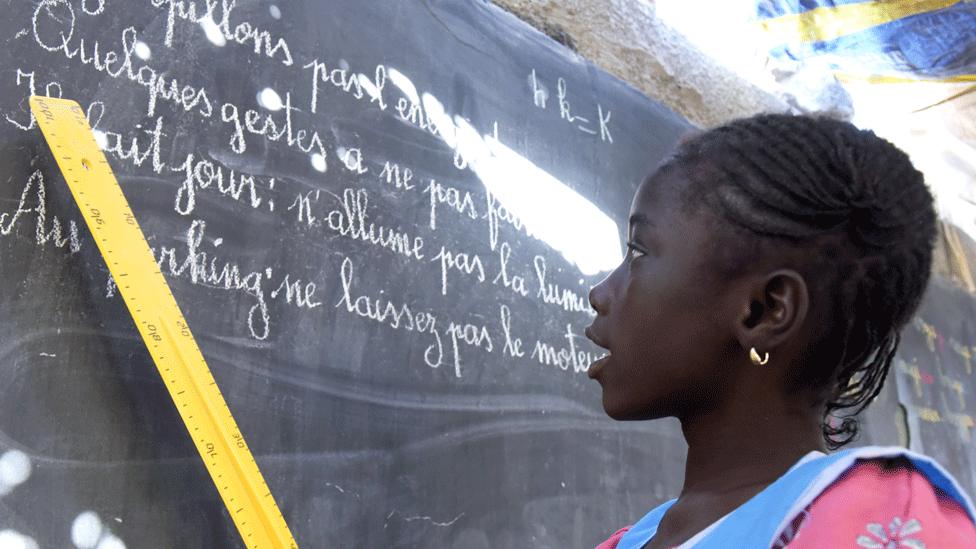
Today, millions of African children still learn in languages they don’t speak at home. UNESCO has repeatedly shown that mother-tongue education leads to better comprehension and literacy, yet fewer than 20% of African learners are taught in their mother language . When a child struggles in class because the language feels foreign, the system doesn’t blame the language it blames the child. That’s not education, I t’s quiet exclusion.

Post independence governments often kept colonial languages because choosing one indigenous language over another risked ethnic conflict. English or French became the so called “neutral” option, even when almost nobody spoke them at home, as seen in cases like Rwanda’s early post colonial policy. Neutrality, it turns out, is often just power wearing a friendly name.
Still, Africans have never been passive. Writers like Chinua Achebe used English deliberately, filling it with African proverbs and rhythms, turning the colonizer’s language into a tool of critique rather than submission. Postcolonial literature across the continent shows how imposed languages can be repurposed to resist the very systems that elevated them.
And now, resistance looks digital. African languages are thriving online. In music, memes, TikToks, podcasts and political commentary. Swahili Twitter, Hausa YouTube, isiZulu TikTok aren’t just fun but proof that African languages can carry complexity, humor, theory and critique. UNESCO and other institutions increasingly support multilingual education and language preservation, recognizing that development doesn’t require linguistic erasure . Even Economic Research links language aligned education to better long term outcomes .
So yes, language is power. In Africa, it always has been. But so is discernment. We can interrogate systems without canonizing flawed individuals. We can value ideas while refusing to excuse harm. And maybe real decolonization isn’t just about which language we speak, but about learning to question authority even when it speaks beautifully.
Leave a Reply