

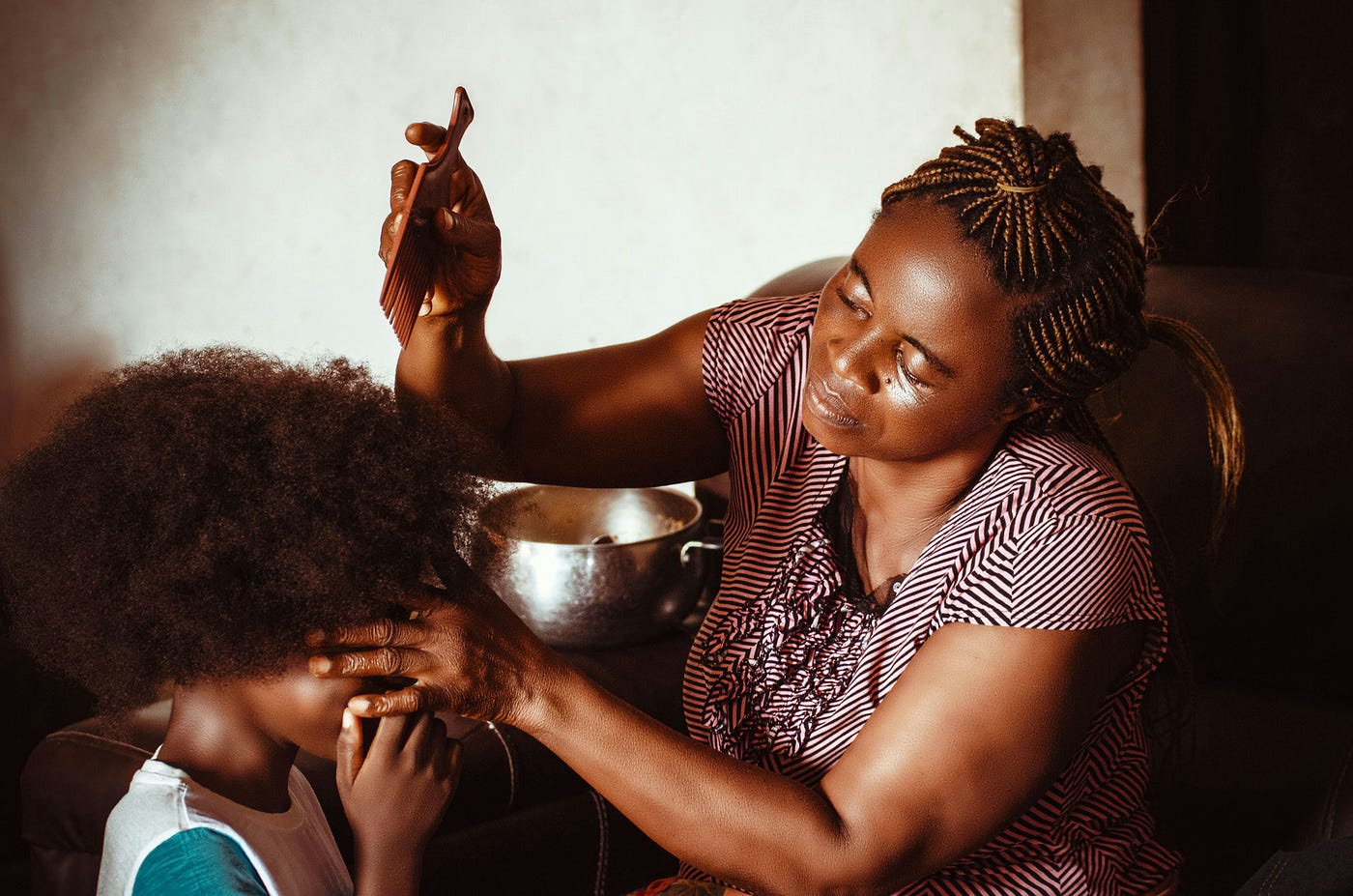
If African parents had a love language, it might be Acts of Service with a minor in Emotional Silence.
Not silence because there’s no love. Silence because the love shows up wearing a completely different outfit.

Your mother wakes up at 5:30 a.m. to cook before work. Your father sends you money and the only text you get is, “Did you receive it?” Your aunt cuts fruit and slides the plate across the table like she’s in a quiet indie film. No emotional TED Talk. No “I’m proud of you.” Just vibes, responsibilities, and the occasional “Have you eaten?”
And somehow you still know you’re loved.
African parents have mastered what I call love without subtitles. The feeling is there, but the dialogue track is missing.
The internet loves to joke about this. There’s an entire genre of memes built on the idea that African parents will sacrifice everything for their children but struggle to verbally express affection. The funny thing is… it’s not completely fiction.
In many traditional communities, parenting has historically emphasized discipline, respect, and responsibility more than emotional expression. Researchers studying parenting across cultures have pointed out that in many collectivist societies, obedience and social harmony are prioritized, while open emotional expression isn’t always encouraged the same way it is in Western cultures.
The translation is basically that if you fall and cry, the response might be “Stand up. You’re fine.”
Not because they don’t care but because resilience is part of the curriculum.
And to be fair, our parents didn’t invent this emotional minimalism out of nowhere. A lot of them simply inherited it. Parenting style often pass down generationally, meaning people tend to raise children the way they were raised themselvesp.
So imagine a whole lineage of people whose emotional vocabulary was basically:
Eat.
Study.
Respect elders.
Don’t embarrass the family.
Now suddenly their Gen Z child is asking them, “Can we unpack my feelings?”
Sir.
Madam.
That chapter was never in the syllabus.
But here’s the nuance the internet sometimes forgets: African parents are not emotionally empty. They just communicate affection differently.
Communication scholars even suggest that affection isn’t only expressed through words. According to Affection Exchange Theory, behaviors like protection, caregiving, and providing resources can function as powerful expressions of love and bonding.
Which explains a lot.
An African parent might never say “I love you,” but they will absolutely fight a teacher, a landlord, and possibly the entire electricity company if they think you’re being disrespected.
Another layer to the emotional puzzle is language itself. Across Africa, many families speak multiple languages and interestingly, people often express emotions differently depending on the language they’re using. Studies on multilingual families show that people may switch languages when expressing strong emotions or intimacy.
Which means somewhere out there is a parent who cannot say “I love you” in their native language but will suddenly become Shakespeare in English.
“Goodnight my darling.”
But if you break a plate? Immediate switch back to the ancestral language.
Emotion unlocked.
Of course, it’s important to say the quiet part out loud: not every African parent fits this stereotype.
Many parents are emotionally expressive, communicative and deeply engaged in their children’s emotional lives. Research on African and African-diaspora families actually shows that many parents actively support their children’s emotional development and wellbeing.
And things are changing.
Across the continent and the diaspora, conversations about therapy, emotional intelligence, and mental health are becoming more normal. Younger generations are asking different questions about vulnerability, communication, and healing.
Which means two generations are slowly meeting in the middle.
Parents who show love through sacrifice.
Children who want love expressed in language.
One generation says:
“I paid your school fees.”
The other says:
“Yes… but can we also talk about our attachment styles?”
It’s basically a cultural negotiation happening in real time.
And honestly, the most beautiful moments happen in the small cracks between those two worlds.
Like when an African parent accidentally becomes emotionally vulnerable and immediately changes the subject.
Or when they call just to ask, “Have you eaten?” — which everyone knows is code for “I care about your existence but I’m not about to say that directly.”
Or when you discover they’ve been bragging about you to relatives like you’re a national achievement.
Because that’s another classic move.
African parents may never compliment you to your face.
But somewhere in the extended family WhatsApp group, you are apparently a genius.
Love without language.
Loud in action. Quiet in words.
And maybe the real story isn’t that the love was missing.
It was just speaking a different dialect.
Leave a Reply