

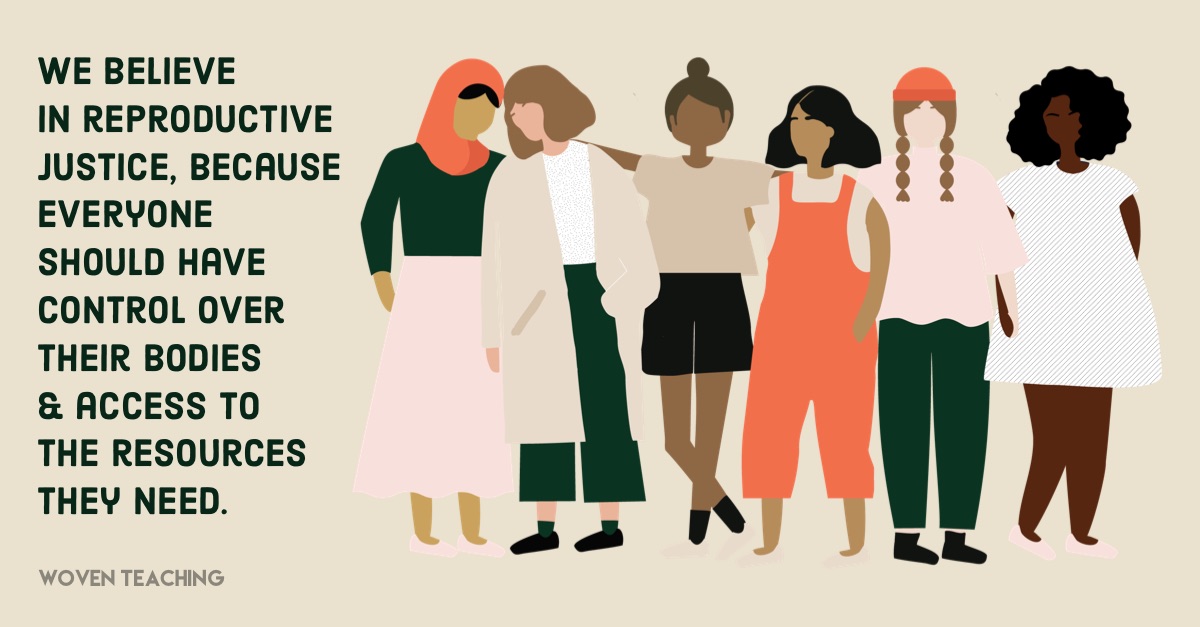
There’s something deeply African about how everyone has an opinion on your womb.
Your aunties. Your pastor. That one uncle who only appears at weddings and funerals but somehow has a PhD in “what women should do.” Even the government, casually sitting somewhere drafting policies like your uterus is a national resource.
And the thing is… it kind of is.
Not in a poetic “mother of the nation” way (please, let’s rest). But in a very real, political, economic and cultural sense. Reproductive rights in Africa are less about “choice” and more about control. So basically who gets to decide when, how and why a woman becomes a mother.
Spoiler alert: it’s rarely the woman.

Let’s start with the obvious contradiction. Africa is a continent that loves life. Children are blessings, babies are community property and pregnancy announcements travel faster than breaking news. But somehow, the systems meant to protect that life? Very unserious.
According to the Guttmacher Institute fact sheet on Sub-Saharan Africa, about 6.2 million unsafe abortions happen every year in the region. This is not because African women woke up and chose chaos by the way, but because access to safe reproductive healthcare is limited, restricted or heavily stigmatized.
And here’s the part that should make everyone pause: 75% of abortions in Africa are unsafe.
Seventy five percent.
That’s not a statistic, that’s a crisis.
It sounds like “we banned the thing but forgot humans exist.”
Because the truth no one likes to say out loud that restricting abortion doesn’t stop abortion. It just makes it dangerous. Women don’t suddenly become celibate saints because the law said so. They just become quieter, riskier and more likely to end up in a hospital… or worse.
And the consequences are not abstract.
Unsafe abortion contributes to around 16% of maternal deaths in Africa.
Let me translate that into something more real and understandable. Women are literally dying because they don’t have safe, legal and accessible options to make decisions about their own bodies.
But the conversation doesn’t even start at abortion. That’s just the loudest part.
The real issue begins earlier with contraception, education and autonomy.
Sub Saharan Africa has the highest rate of unintended pregnancies globally. And that’s not because people don’t know how babies are made (please), but because access to contraception, accurate sex education and healthcare is inconsistent at best and gatekept at worst.
Sometimes it’s money.
Sometimes it’s distance. The nearest clinic is three bodas and a prayer away.
Sometimes it’s culture. Where asking for contraception as a young woman gets you labeled “fast” before you even finish your sentence.
And sometimes, it’s power.
Because in many contexts, reproductive decisions are not individual decisions. They’re negotiated, with partners, families and communities. There are places where a woman still needs her husband’s approval to access certain health services.
Imagine needing permission to not get pregnant.
That’s not a choice. That’s a group project.
To be fair, this isn’t a “Africa bad” conversation. It’s a “systems are complex” conversation. Culture, religion, colonial laws (yes, many abortion laws are colonial leftovers, so yes history is embarrassing sometimes) and economic realities all collide here.
Even countries with relatively liberal laws struggle. Zambia, for example, technically allows abortion under certain conditions but stigma and lack of awareness still push many women towards unsafe options.
So the law says “yes,” but society says “are you mad?”
And guess which one people listen to.
But there’s also nuance because Africa is not one big WhatsApp group. Some countries like South Africa have more progressive frameworks and there are grassroots movements across the continent pushing for better reproductive health access, education and policy reform.
There are midwives, activists, NGOs and even entire community programs trying to shift the narrative slowly, persistently and sometimes against heavy resistance.
Reproductive rights are not just about abortion. They’re about dignity.
They’re about whether a girl can stay in school instead of becoming a teenage mother.
Whether a woman can survive childbirth because let’s not forget, Sub Saharan Africa still accounts for a majority of global maternal deaths.
Whether people can plan their families instead of reacting to circumstances.
It’s about control but it should not be the kind imposed from the outside.
The kind that comes from within.
And maybe that’s the real discomfort.
Because once women have full control over their bodies, their timelines and their choices, a lot of existing systems start to shake. Patriarchy gets nervous. Tradition starts stuttering. Even politics has to adjust its script.
And suddenly, it’s no longer just about babies.
It’s about power.
So when we talk about reproductive rights in Africa, we’re not just talking about healthcare. We’re talking about who gets to make decisions, whose voice matters and whose life is considered worth protecting before, during and after pregnancy.
And until that answer is consistently “the woman herself,”
we’re still having the wrong conversation.
Leave a Reply